So I’m a little crazy but not in regards to this- your house plants communicate their needs! Obviously I don’t mean they raise up a leaf and yell “hey Im thirsty girl” but just like humans, plants communicate with us through visual cues that give you a key heads up that something is wrong or they need help.
By learning to interpret the signs of plant distress, you can become a skilled plant parent who has to throw away hopefully a lot less plants that didn’t make it. And that can sound like a lot to learn but honestly I have found that your plants truly do tell you when they need help 🙂
We are going to chat all about the subtle messages conveyed through wilting leaves, discoloration, curling, or dropping foliage. These signs serve as their distress signals, guiding you to take action and restore harmony to their living environment.
Let’s get started on this journey together and embark on a quest to become fluent in the language of plants.
What Are The Signs My Plants In Distress?
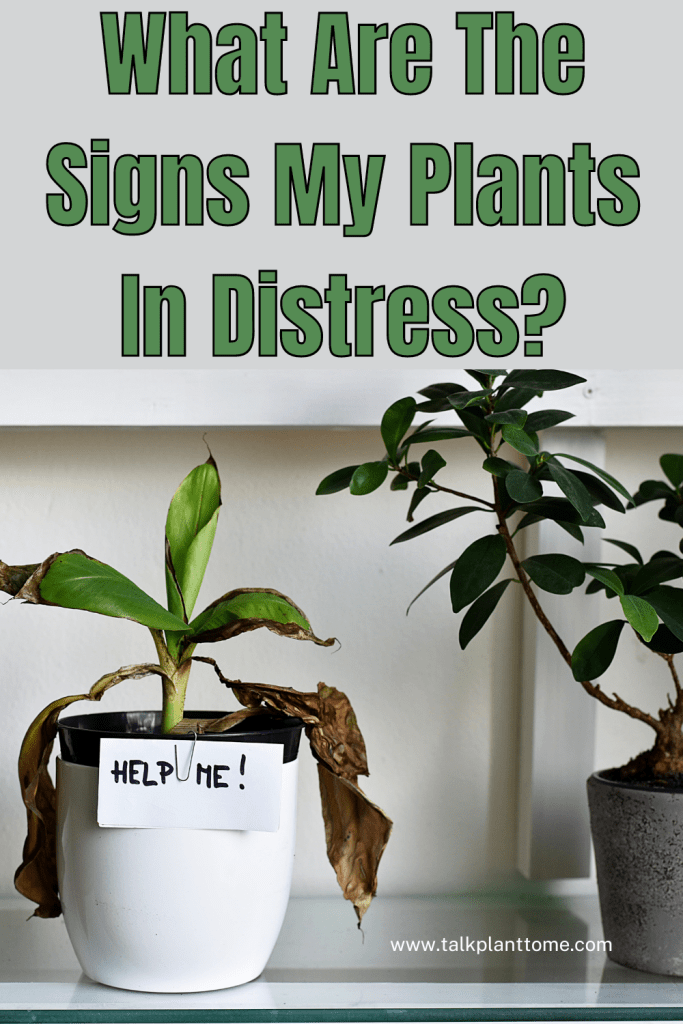
Wilting: First things first- wilting! When a plant is stressed or ill, its leaves may start to droop or wilt, even if it has been adequately watered. Wilting is a clear sign that something is really struggling for your plant and chances are it’s light or water related.
Discoloration: Yellowing, browning, or spotting of leaves can indicate various issues, such as nutrient deficiencies, overwatering, underwatering (aka my personal nightmare), or pests.
Leaf Curling: Leaves that curl inward or downward may suggest a lack of moisture, high temperatures, or insect infestation.
Leaf Drop: Excessive leaf shedding, especially if it occurs outside of the plant’s natural growth cycle, can be a sign of stress or disease. Don’t get spooked by an occasional dropped leaf because that is normal and to be expected during the plant lifecycle. But more than like one a month? Your plants screaming that something is wrong.
Stunted Growth: If a plant is not growing as expected or shows little to no new growth, it could be a result of poor light, inadequate nutrients, or root problems.
Mold or Fungus: Alright not the most hidden usually because mold has a way of jumping out at you. But the presence of mold or fungal growth on the soil surface, leaves, or stems may indicate overly moist conditions or poor air circulation.
Malformed Leaves: Distorted, misshapen, or twisted leaves can be caused by various factors, including pests (especially new holes or edges missing), diseases, or environmental stressors.
Weak or Leggy Stems: Plants that exhibit long, weak stems and sparse foliage may not be receiving enough light or are stretching towards a light source.
Leaf Spotting or Yellowing: Small spots, discoloration, or yellowing on leaves can be a sign of fungal or bacterial infections, nutrient deficiencies, or pest damage.
Pest Infestation: Presence of insects, such as aphids, spider mites, or mealybugs, can cause visible damage to leaves, including holes, webs, or sticky residue.
It’s important to note that these signs can have multiple causes and proper identification is crucial for effective treatment. Daunting I know but guys if you notice any of these signs in your plants, it’s recommended to research the specific symptoms or consult a plant expert, such as a horticulturist or a local plant nursery, to diagnose the issue accurately and provide appropriate care.
What can I do when my plant is stressed?
If you notice that your house plant is showing signs of stress or illness, it’s essential to take prompt action to help restore its health. Here are some steps you can take to make your plant better:
Assess the Environment: Alright first things first we gotta do a little evaluation. Evaluate the conditions in which your plant is placed. Check for factors such as lighting, temperature, humidity, and airflow. Make adjustments if needed to provide optimal conditions for your specific plant species.
Adjust Watering: Ensure that you are providing the right amount of water for your plant. Avoid overwatering or underwatering, as both can cause stress. Research your plant’s specific watering needs and adjust your routine accordingly. Consider factors like the plant’s soil moisture, pot drainage, and water quality.
Check for Pests: Examine your plant closely for any signs of pest infestation. You might see the actual pests but chances are it’s more of an evidence trail like holes/bite marks, webs, or sticky residue. Identify the type of pest and choose an appropriate method to control and eliminate them, whether it’s through natural remedies or organic insecticides.
Assess Soil and Nutrients: Check the quality of the soil and assess if your plant needs fresh potting mix or additional nutrients. Some plants benefit from regular fertilization, while others have specific nutrient requirements. Research your plant’s nutritional needs and apply fertilizers accordingly, following the recommended dosage.
Prune and Clean: Remove any dead or damaged leaves, stems, or flowers to promote new growth and prevent the spread of diseases. Wipe down the leaves with a damp cloth to remove dust, which can hinder their ability to photosynthesize effectively.
Provide Support: If your plant has weak or leggy stems, consider providing support with stakes, trellises, or plant ties to encourage more upright growth.
Monitor and Observe: Keep a close eye on your plant’s progress after taking the necessary actions. Observe for any changes in its appearance, growth, or overall health. Adjust your care routine if needed based on your plant’s response.
Remember that every plant is unique, and different species may have specific requirements. Consult reliable sources, such as plant care guides or local horticulturists, for tailored advice based on your specific plant variety. With patience, care, and attention, you can nurse your stressed or sick plant back to vitality and enjoy its green beauty once again.
Talk Plant To Me
If you enjoyed this article on What Are The Signs My Plants In Distress? then you probably (hopefully!) will enjoy and find these articles helpful as well:
 | Talk Plant To Me |