Monstera, with its iconic fenestrated leaves resembling Swiss cheese, has become one of the most sought-after houseplants in recent years. Apart from its widespread appeal, Monstera plants are ALSO known for their ease of propagation.
One of the most popular methods (for a darn good reason- it’s the easiest method and most reliable by far) is water propagation, which allows you to witness the magical transformation from a tiny cutting to a well-rooted plant. So today I am going to help guide you through the step-by-step process of water propagating Monstera, providing you with the knowledge and confidence to successfully grow your own thriving Monstera plant.
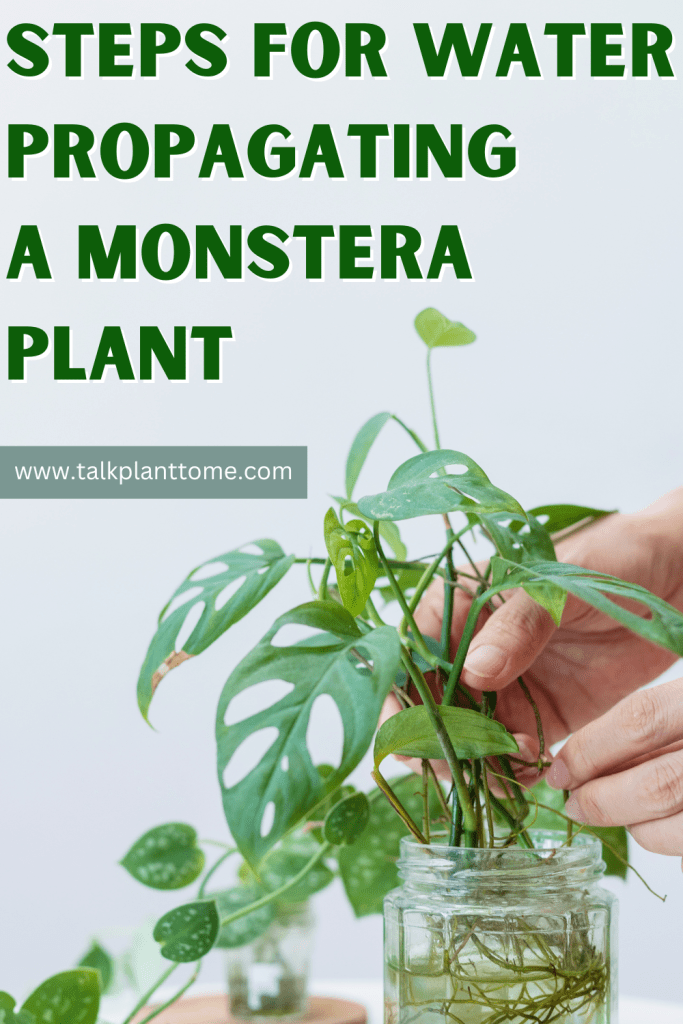
Steps For Water Propagating a Monstera Plant
How to propagate your monstera in water:
Water propagation is a popular method for propagating Monsteras, also known as Swiss cheese plants. Follow these steps for water propagation:
Step 1 – Select a healthy stem cutting:
The first step in water propagation is to carefully choose a healthy stem cutting. Look for a cutting that is approximately 6-8 inches long, with a few mature leaves. It’s important to select a cutting that has at least one node, which is a small bump on the stem from where roots will emerge. Ensure that the cutting is free from any signs of pests, diseases, or damage.
Tips to find the best stem for propagating:
- Choose a healthy parent plant: The health of the parent plant is crucial because it directly influences the quality of the stem cutting you will be propagating. Look for a parent plant that is vigorous, free from pests and diseases, and exhibiting strong growth.
- Select a stem that is mature but not too woody: Look for stems that are mature enough to have developed a firm structure but are not overly woody. Stems that are too young or too old may have a harder time rooting successfully. Find a balance where the stem is firm and robust but still flexible enough to encourage root development.
- Look for nodes: Nodes are important for root development in most plants. Nodes are the areas on the stem where leaves and buds emerge. Ideally, you want to select a stem cutting that has at least one or preferably multiple nodes, as these are the points from which roots will emerge.
- Opt for a straight and healthy stem: Choose a stem that is straight, without any signs of damage, rot, or discoloration. Avoid stems that have lesions, wounds, or signs of disease. A healthy stem will have smooth bark and a vibrant color.
- Consider the length of the stem: Depending on the plant species, the length of the stem cutting can vary. Generally, aim for stem cuttings that are 4-6 inches long, although some plants may require longer or shorter cuttings. Ensure that the cutting is long enough to have a sufficient number of nodes for root development.
- Take cuttings in the morning: It’s generally recommended to take stem cuttings in the morning when the plants are adequately hydrated and the temperatures are cooler. This can help prevent excessive water loss and stress on the cutting.
Step 2 – Prepare the cutting:
Using clean and sharp pruning shears or a knife, make a clean cut just below a node. This will provide a fresh and healthy surface for root development. Remove any lower leaves from the cutting, leaving a few leaves at the top intact. This helps the cutting focus its energy on root growth.
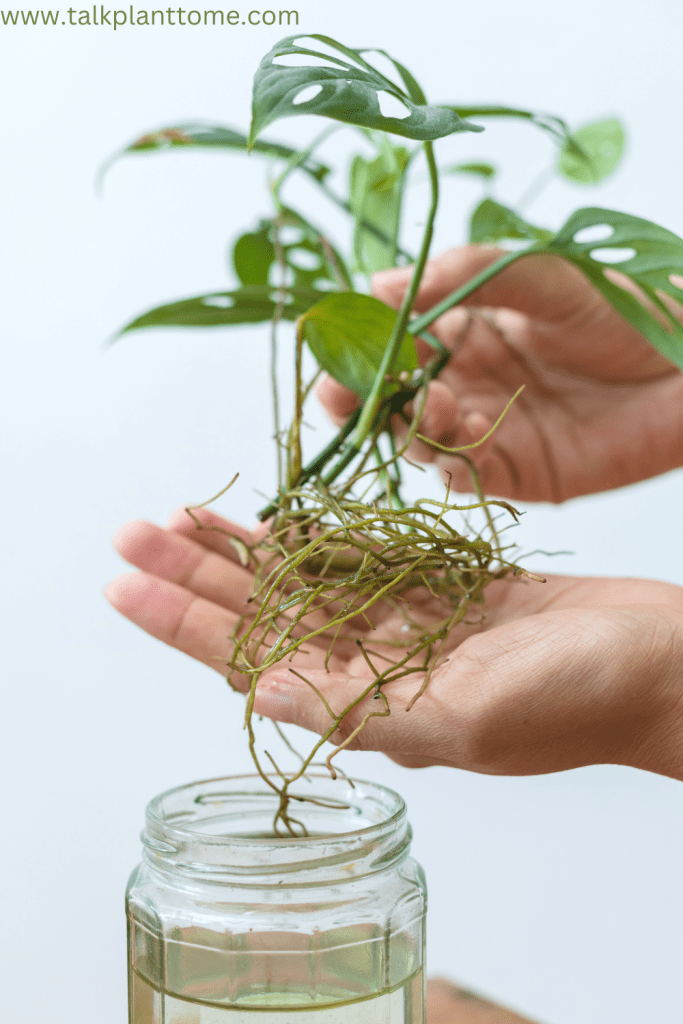
Step 3 – Place the cutting in water:
Find a clean glass or jar and fill it with room temperature water. Gently place the stem cutting into the water, ensuring that the node is fully submerged. It’s essential to have the node in water as it is the area where roots will emerge. You can use a clear container to monitor the progress of root growth, which adds an element of excitement to the propagation process.
Step 4 – Find an appropriate location:
Choose a warm location with bright, indirect light for your water-propagated Monstera cutting. Avoid placing it in direct sunlight, as the intense rays can be detrimental to the cutting. A windowsill with filtered light or a spot near a bright window are ideal locations. The warmth and light will encourage root development while ensuring the cutting doesn’t get stressed.

Step 5 – Monitor and maintain the water:
Regular monitoring and maintenance of the water are crucial for successful water propagation. Check the water level frequently to ensure that the node and lower stem are submerged. If necessary, add more water to maintain the desired level. It’s advisable to change the water every 7-10 days to prevent the growth of algae or bacteria. Using filtered or distilled water can also help avoid any harmful chemicals that might be present in tap water.
Step 6 – Patience and observation:
Water propagation requires patience and a watchful eye. It can take several weeks to months for roots to emerge, depending on the environmental conditions and the Monstera variety. Be patient and resist the temptation to disturb the cutting. Observe the cutting closely for any signs of decay, rot, or mold. If you notice any issues, trim off the affected area immediately and change the water to prevent further problems.
Step 7 – Transplanting into soil:
Once the cutting has developed a substantial root system (several inches long), it is ready to be transferred to soil. Prepare a well-draining potting mix suitable for Monsteras, such as a mixture of peat moss, perlite, and potting soil. Carefully plant the rooted cutting, ensuring the soil covers the roots and provides stability.
Step 8 – Provide proper care:
After transplanting, place the newly potted Monstera in a bright, indirect light location. Water it moderately, allowing the top inch of soil to dry between waterings. Maintain a warm and humid environment, as Monsteras prefer higher humidity levels.
With proper care and patience, your water-propagated Monstera cutting will develop into a healthy and thriving plant. Remember to adjust these instructions based on your specific circumstances and the needs of your plant.
Talk Plant To Me
If you enjoyed this article on Steps For Water Propagating a Monstera Plant then you probably (hopefully!) will enjoy these articles as well:
 | Talk Plant To Me |