Air plants, those whimsical green wonders that seem to defy gravity, have captured the hearts of plant enthusiasts everywhere. Their unique ability to thrive without soil and their striking appearance make them a popular choice for both beginners and experienced plant lovers. But if you’ve ever wondered how to care for an air plant and keep it looking its best, you’re in the right place.
In this article, we’re going to demystify the art of air plant care and provide you with all the essential tips and tricks to ensure your Tillandsia thrives. Whether you’re a seasoned plant parent looking to expand your collection or a newcomer eager to embrace the world of air plants, this guide will help you keep these delightful green companions healthy and happy.
From proper watering techniques to the ideal light conditions and creative display ideas, we’ve got you covered. So, let’s dive into the fascinating world of air plants and learn how to care for these captivating botanical marvels. Your air plants will thank you with their unique beauty and resilience, making them the perfect addition to your indoor garden.
How To Care for An Air Plant
Tips for growing air plants:
- Light:
- Air plants prefer bright, indirect light. Place them near a window with filtered sunlight or under fluorescent lights.
- Avoid exposing them to direct sunlight for extended periods, as this can cause them to become dehydrated or develop sunburn.
- Watering:
- One of the most crucial aspects of air plant care is proper watering. Mist your air plant with a spray bottle 2-3 times a week or submerge it in water for 20-30 minutes every 1-2 weeks.
- Use room-temperature tap water or rainwater for misting or soaking. Avoid using softened or distilled water, as minerals are essential for air plant health.
- After watering, turn the plant upside down and shake gently to remove excess water from the base. Let it dry completely before placing it back in its holder.
- Air Circulation:
- Air plants thrive on good air circulation. Ensure there’s adequate airflow around them to prevent mold or rot.
- If your air plant is kept in a decorative holder or terrarium, remove it periodically to allow it to breathe and dry thoroughly.
- Temperature:
- Air plants prefer temperatures between 50°F to 90°F (10°C to 32°C). Protect them from freezing temperatures, as they are sensitive to cold.
- Avoid placing them near heaters or radiators, which can lead to dehydration.
- Fertilizing:
- Air plants require minimal nutrients. Use a water-soluble, bromeliad or air plant fertilizer diluted to 1/4 strength, and apply it once a month during the growing season (spring to early fall).
- Display:
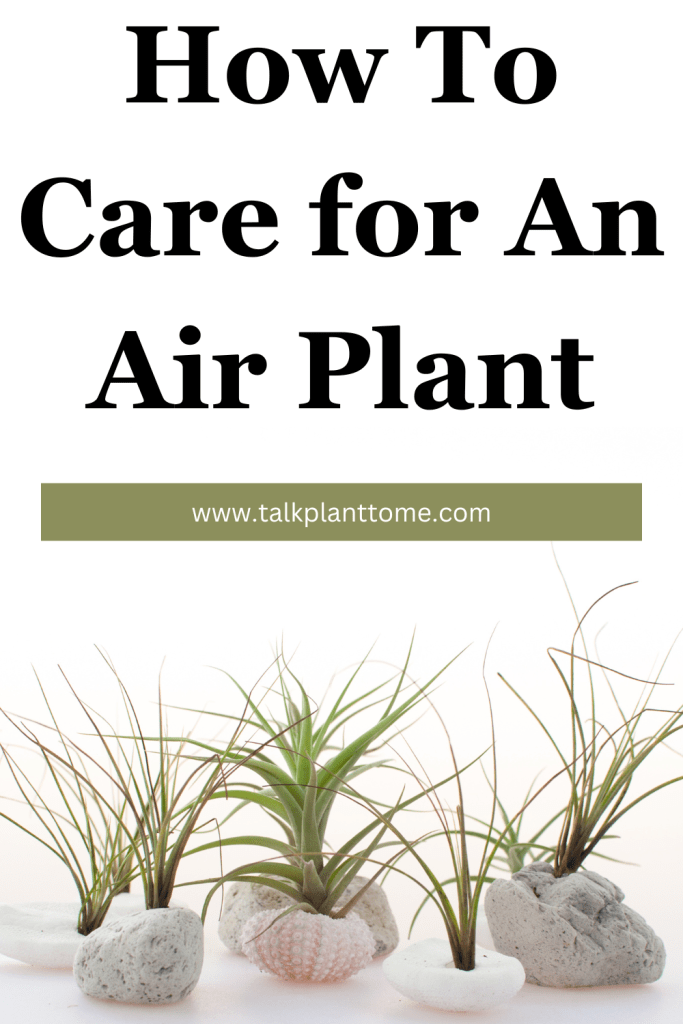
- Air plants can be displayed in various creative ways. Place them in glass terrariums, on driftwood, seashells, or decorative holders.
- Choose a display option that allows for easy removal and proper airflow.
- Pup Propagation:
- Air plants produce offsets, or “pups,” as part of their natural growth cycle. You can gently separate these pups from the parent plant once they are about one-third the size of the parent.
- Allow the pups to dry for a few hours before placing them in their own display or holder.
- Rejuvenation:
- If your air plant appears unhealthy, you can try to revive it by soaking it in water for several hours or overnight. Afterward, allow it to dry completely.
- Trimming any brown or dead leaves can also help rejuvenate the plant’s appearance.
With these care guidelines, you can enjoy the unique beauty of air plants in your home or office while keeping them healthy and thriving. Remember that air plants are resilient and forgiving, making them an excellent choice for both beginners and experienced plant enthusiasts.
Talk Plant to Me
If you enjoyed this article on How To Care for An Air Plant then you probably (hopefully!) will enjoy and find these articles helpful:
 | Talk Plant To Me |