If you’re anything like me, you’ve probably fallen head over heels for the whimsical beauty of a string of pearls plant (Senecio rowleyanus). Those cascading strands of bead-like leaves are like living jewelry for your home. But, just like any piece of jewelry, they need a little TLC to keep them looking their best.
Caring for a string of pearls plant might seem like a daunting task, especially if you’re new to succulents, but fear not! I’m here to guide you through the ins and outs of keeping these delightful succulents thriving. From light and watering to potting and propagation, we’ll cover it all.
So, if you’re ready to learn the secrets of nurturing a string of pearls plant that will turn heads and make your friends green with envy (pun intended), grab your gardening gloves, and let’s dive into this care guide together!
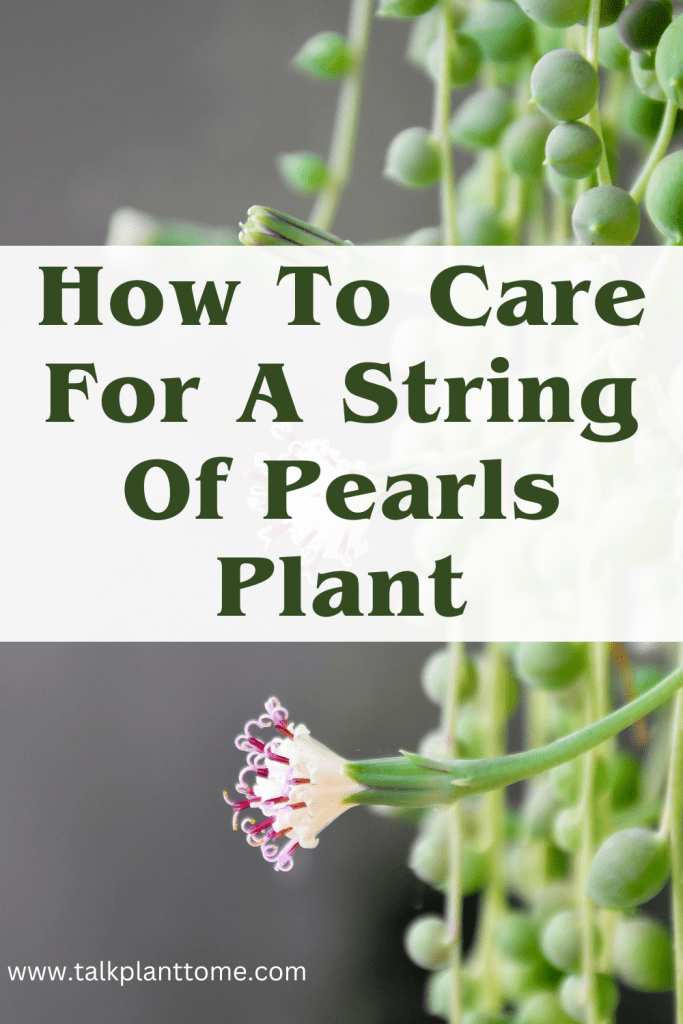
How To Care For A String Of Pearls Plant
Tips for growing string of pearl plants:
- Light: Place your string of pearls in bright, indirect sunlight. While they can tolerate some direct morning sunlight, avoid harsh afternoon sun, as it can scorch the delicate leaves. If you’re growing them indoors, a sunny windowsill or a location with filtered sunlight is ideal.
- Temperature: String of pearls prefer temperatures between 70-80°F (21-27°C) during the growing season. They can tolerate slightly cooler temperatures in the winter, but it’s best to keep them above 50°F (10°C).
- Pot and Soil: Plant your string of pearls in a well-draining cactus or succulent potting mix. Choose a pot with drainage holes to prevent waterlogged soil, as these plants are susceptible to root rot.
- Watering: Allow the top 1-2 inches of soil to dry out before watering. String of pearls are succulents, so they’re drought-tolerant and prefer to dry out between waterings. When you water, give them a good soak but ensure that excess water drains out of the pot. Be cautious not to let them sit in standing water.
- Humidity: These plants don’t require high humidity levels, making them suitable for most indoor environments. However, they benefit from occasional misting during dry indoor conditions or in arid climates.
- Fertilizing: Feed your string of pearls with a balanced, water-soluble fertilizer diluted to half strength during the growing season (spring and summer). Reduce or eliminate fertilization in the fall and winter when the plant’s growth slows down.
- Pruning: Prune your string of pearls to maintain its shape and remove any dead or yellowing strands. Pinch or snip stems just above a set of leaves, which can encourage branching and fuller growth.
- Pest Control: Keep an eye out for common succulent pests like mealybugs and spider mites. If you notice any pests, remove them with a soft brush or a gentle spray of water. You can also use neem oil or insecticidal soap for more severe infestations.
- Repotting: String of pearls plants generally don’t need frequent repotting. Repot when the plant has outgrown its container, typically every 2-3 years. Choose a pot that’s only slightly larger to prevent overwatering.
- Propagation: You can propagate string of pearls through stem cuttings. Allow cuttings to callus for a day or two before planting them in well-draining soil. Keep the soil consistently moist until roots develop.
- Support: As the plant grows, it may become top-heavy. Provide support with stakes or trellises to help it maintain an upright appearance.
- Overwintering: During the winter, reduce watering frequency as the plant’s growth naturally slows down. It’s also advisable to protect your string of pearls from drafts and extreme cold temperatures.
String of pearls can be a delightful addition to your indoor or outdoor garden, providing a unique and eye-catching display. With proper care and attention to their specific needs, you can enjoy their cascading beauty for years to come.
Talk Plant To Me
If you enjoyed this article on How To Care For A String Of Pearls Plant then you probably (hopefully!) will enjoy these articles as well:
 | Talk Plant To Me |