
If you’re on the lookout for a pretty, low-maintenance houseplant that’s both beautiful and easy to grow, you’ve come to the right place. Today, we’re diving into the ultimate guide to nurturing an arrowhead plant (Syngonium podophyllum). Whether you’re a pro plant parent or just starting your indoor jungle, this delightful foliage plant is sure to capture your heart and brighten up your living space.
With its unique and cool arrow-shaped leaves and adaptability to a variety of indoor conditions, the arrowhead plant is a true gem in the world of houseplants. Whether you want to cultivate a lush green oasis in your home or simply add a touch of nature to your workspace, this versatile plant has got you covered. So, roll up your sleeves, grab your gardening gloves, and let’s embark on a journey to uncover the secrets of growing and caring for this delightful plant.
In this comprehensive guide, we’ll cover everything you need to know, from the basics of lighting and watering to tips on propagation and troubleshooting common issues. Whether you’re nurturing a seasoned arrowhead veteran or welcoming your first plant into your home, this guide is packed with expert tips and practical advice to help your arrowhead plant thrive. So, let’s get started on your journey to becoming an arrowhead plant aficionado!
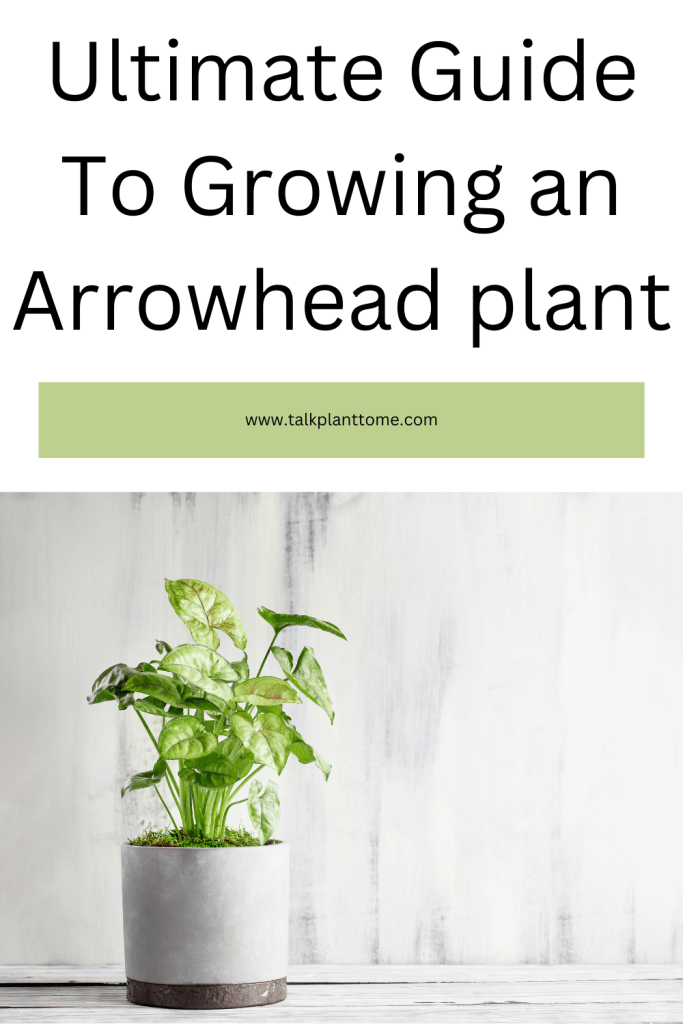
Ultimate Guide To Growing an Arrowhead plant
How to grow and care for an arrowhead house plant:
Light:
- Arrowhead plants thrive in bright, indirect light. Avoid direct sunlight, as it can scorch their leaves. Place them near a north or east-facing window, or provide filtered light if needed.
- Tip: if you see crisping around the edge of leaves they are probably getting “sun burnt” so move them into less direst light.
2. Temperature:
- Maintain a consistent temperature between 60°F to 75°F (15°C to 24°C). These plants are sensitive to cold drafts, so protect them from chilly air.
- Tip: don’t put them near any vents in your home that will be producing that wonder chilly air in the summer. We love the air conditioning but it can be too chilly for you arrowhead plant.
3. Watering:
- Keep the soil evenly moist but not soggy. Allow the top inch or two of the soil to dry out between waterings. Reduce watering during the winter months when growth slows down. You don’t want to overwater in the winter because it can lead to the dreaded root rot!
4. Humidity:
- Arrowhead plants appreciate higher humidity levels. Mist the plant regularly or use a humidity tray to keep the air around the plant humid, especially during dry indoor conditions.
5. Soil:
- Use a well-draining potting mix that retains some moisture but doesn’t become waterlogged. A mix containing peat moss, perlite, and a bit of sand works well.
- Tip: If you can’t easily stick your finger into the dirt then it is too compacted which means the water won’t get through to all the roots!
6. Fertilization:
- Feed your arrowhead plant with a balanced, diluted, liquid fertilizer during the growing season (spring and summer). Reduce or stop fertilization in the fall and winter when the plant’s growth slows.
7. Pruning:
- Prune your arrowhead plant to encourage bushier growth and to remove any leggy or yellowing stems. Pinch or cut back the stems just above a leaf node.
- Tip: Always use a sharpened scissor or tool when cutting leaves off. Never just rip them off that can seriously damage the healthy parts of the plant stem too!
8. Repotting:
- Repot your arrowhead plant every 2-3 years or when it becomes root-bound. Choose a slightly larger pot with good drainage, and refresh the potting mix.
9. Pests and Diseases:
- Keep an eye out for common houseplant pests like spider mites, aphids, and mealybugs. Treat any infestations promptly with neem oil or insecticidal soap. Ensure good airflow to prevent fungal issues.
10. Propagation:
- Arrowhead plants are easy to propagate. You can propagate them from stem cuttings in water or directly in soil. Wait until the cuttings have developed roots before transplanting them into pots.
- Tip: Aim for 2-3 inches of root growth but not too much more or they will struggle to root in dirt afterwards!
11. Support:
- As your arrowhead plant grows, consider providing some support like stakes or trellises to help it climb and maintain an attractive shape.
Arrowhead plants are relatively low-maintenance and can adapt to various indoor conditions. With proper care and attention to their specific needs, you can enjoy their beautiful foliage and watch them thrive in your home.

Talk Plant To Me
If you enjoyed this article on Ultimate Guide To Growing an Arrowhead plant then you probably (hopefully!) will enjoy these articles as well:
 | Talk Plant To Me |