
In the world of indoor plants, few species capture the imagination and everyones eye quite like the fiddle leaf fig. With its huge, glossy leaves and unique silhouette, the fiddle leaf fig (aka formally known as the Ficus lyrata) has become a staple in modern interior design, adding a touch of greenery and sophistication to homes and offices alike. But did you know that you can easily propagate new fiddle leaf fig plants from your existing ones? Whether you’re looking to expand your indoor jungle or share the joy of gardening with friends and family, propagating a fiddle leaf fig is a rewarding and straightforward process.
In this guide, we’ll walk through the steps to propagate a fiddle leaf fig using stem cuttings, the most common and reliable method for beginners. From selecting the perfect parent plant to caring for your new cuttings as they take root, we’ll cover everything you need to know to successfully propagate your own fiddle leaf figs. So grab your pruning shears and let’s dive into the wonderful world of fiddle leaf fig propagation!
Before we begin, it’s essential to understand the basics of fiddle leaf fig anatomy and growth patterns. Fiddle leaf figs are native to tropical rainforests and can grow up to 40 feet tall in their natural habitat. However, when grown indoors as houseplants, they typically reach heights of 6 to 10 feet. These plants produce large, leathery leaves with distinctive violin-shaped outlines, giving rise to their common name. By understanding how fiddle leaf figs grow and develop, we can better replicate their natural conditions to encourage successful propagation.
So let’s roll up our sleeves and get started on propagating your very own fiddle leaf figs!
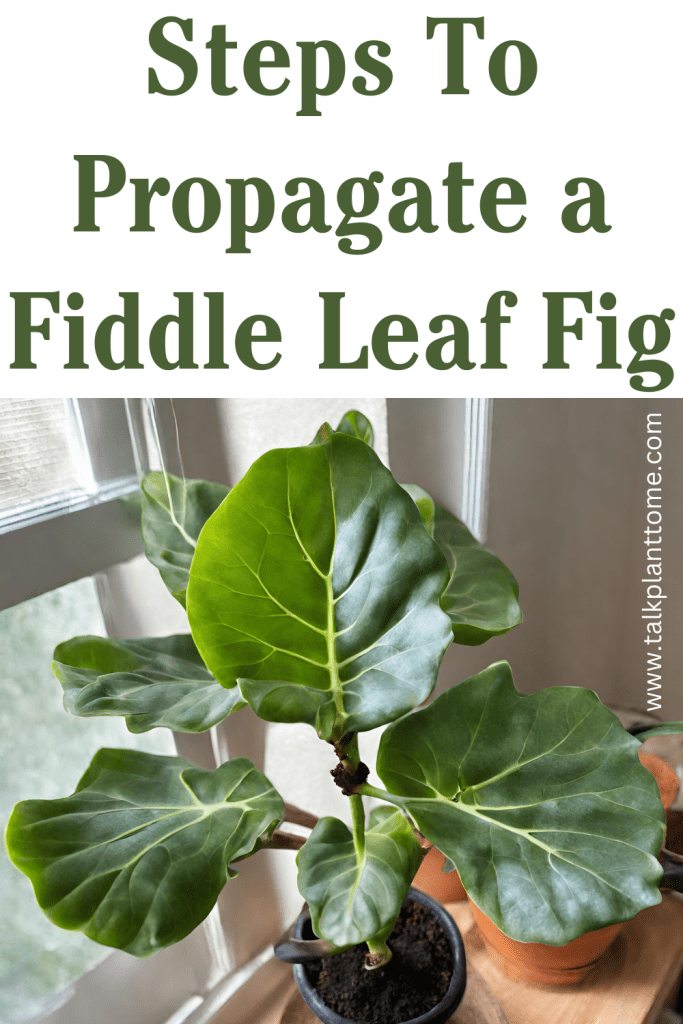
Steps To Propagate a Fiddle Leaf Fig
How to really propagate your fiddle leaf fig plant:
- Select a Healthy Parent Plant: Choose a healthy and mature fiddle leaf fig plant as your parent plant for propagation. Look for a plant with strong stems and vibrant leaves, free from any signs of disease or pest infestation. Avoid leaves that are browning or crisped on the edges. They may be generally healthy but the stronger the plant/cutting the better chance
- Choose the Propagation Method: There are several methods to propagate a fiddle leaf fig, including stem cuttings, air layering, and leaf propagation. Stem cuttings are the most common and straightforward method for beginners.
- Prepare the Tools and Materials: Gather all the necessary tools and materials for propagation, including a sharp and sterilized pair of pruning shears or scissors, a clean container with well-draining soil or water, rooting hormone (optional), and a clear plastic bag or plastic wrap (for humidity).
- Take Stem Cuttings: Select a healthy stem from the parent plant that is at least 6 inches long and has several leaves. Using sharp and sterilized pruning shears, make a clean cut just below a leaf node (where a leaf meets the stem). Remove any leaves from the lower portion of the cutting to expose a few nodes. Do not use regular kitchen scissors – they aren’t sharp enough and can kill the nodes so they can’t actually grow.
- Apply Rooting Hormone (Optional): To encourage faster root development, you can dip the cut end of the stem cutting in rooting hormone powder or gel before planting it in soil or water. This step is optional but may increase the success rate of propagation. In general I don’t find this to be necessary unless you are in a situation where there is just one chance such as if you were given or bought just the one stem.
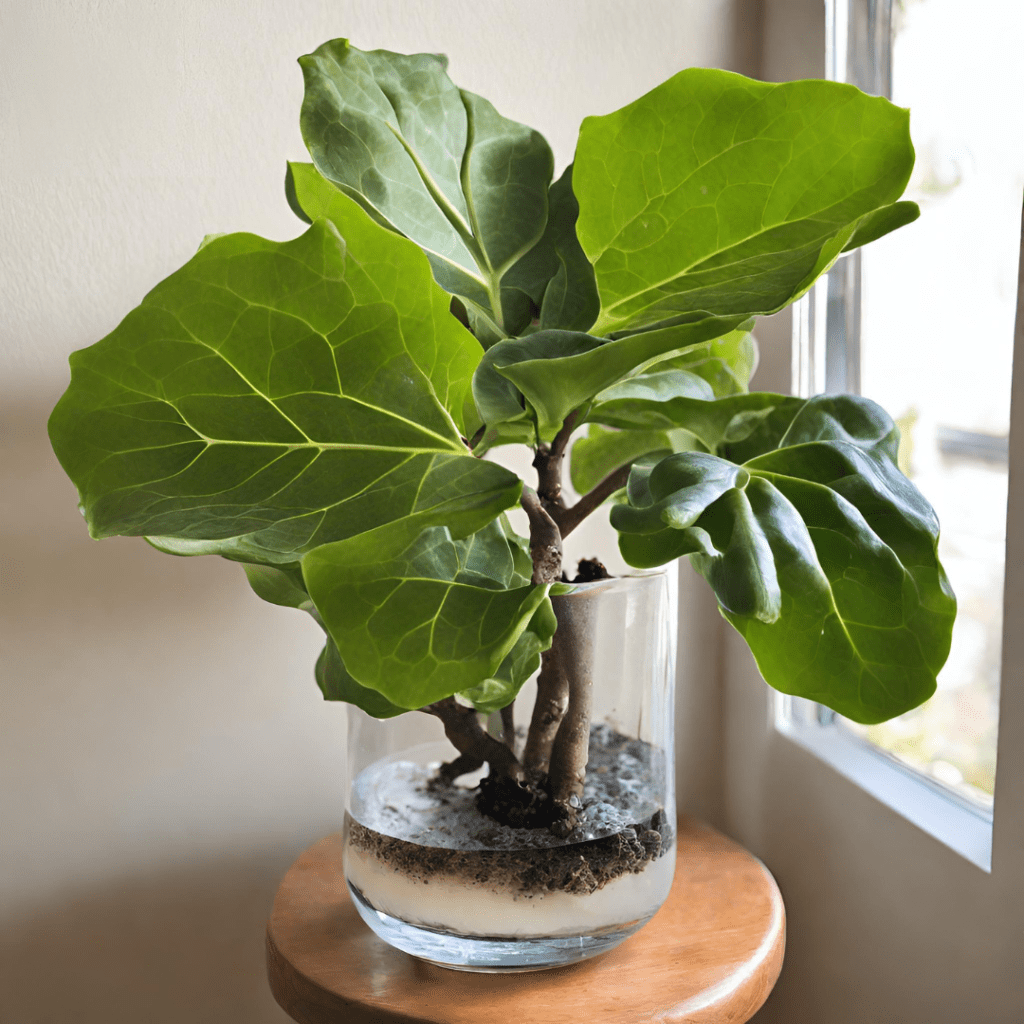
- Plant the Stem Cutting: Insert the cut end of the stem cutting into a container filled with well-draining potting soil or place it in a jar of water. Ensure that at least one or two leaf nodes are submerged in the soil or water. If using soil, gently press the soil around the cutting to provide stability.
- Provide Adequate Care: Place the planted cutting in a warm and bright location with indirect sunlight. Keep the soil consistently moist but not waterlogged, and avoid exposing the cutting to direct sunlight, as this can cause stress. If propagating in water, change the water regularly to prevent stagnation and bacterial growth. Fiddle leafs are fickle but with careful attention they can grow to be the most gorgeous plants!
- Monitor Growth: Over the next few weeks, monitor the cutting for signs of new growth, such as emerging leaves or roots. Once roots have formed and the cutting has established itself, you can transplant it into a larger pot with regular potting soil and treat it like a mature fiddle leaf fig plant.
By following these steps and providing the proper care, you can successfully propagate a fiddle leaf fig and enjoy watching it grow into a thriving new plant. Remember to be patient and attentive to the needs of the cutting as it takes root and establishes itself in its new environment.
Talk Plant To Me
If you enjoyed this article on Steps To Propagate a Fiddle Leaf Fig then you probably (hopefully!) will enjoy these articles as well:
 | Talk Plant To Me |