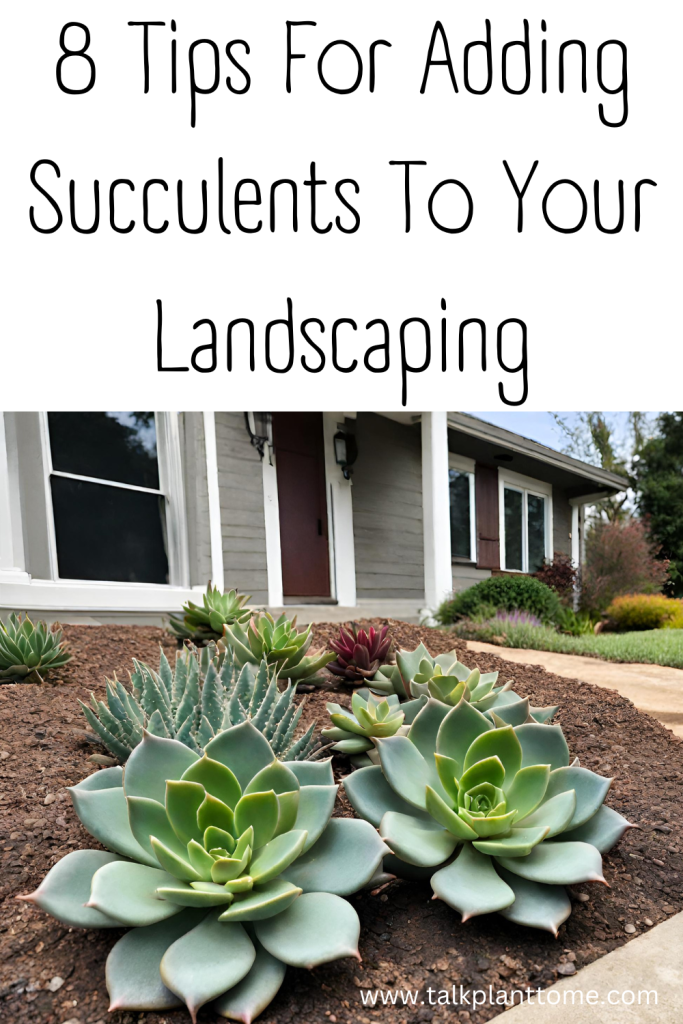
So we have all agreed to step up our landscaping and add more natural elements right? Cool we are on the same page! One way that we can achieve those goals is to add succulents to our outdoor landscaping. Yep you read that right, succulents can be a gorgeous and amazing addition to your yard. They are not just for little pots inside.
But since it’s not common to see them around outside (for reasons beyond me!) it can seem a little daunting and confusing.
So today I want to share the 8 tips for adding succulents to your landscaping that I would have loved to know when I first purchased my home and started landscaping!
Let’s get into these tips so we can start gardening and add succulents to our landscaping.
8 Tips For Adding Succulents To Your Landscaping
What you need to know about succulents in your outdoor landscaping:
- Choose the Right Location: Succulents generally thrive in areas with full sun or partial shade. Ensure they receive at least six hours of sunlight per day. If you live in a hot climate, provide afternoon shade to prevent sunburn. Think about where the sun hits the most often because that might be too harsh of a spot. But also avoid anywhere that is mainly shaded especially by a large structure such as your home!
- Prepare the Soil: Succulents prefer sandy, well-draining soil. You can create this by mixing standard potting soil with coarse sand, perlite, or pumice to improve drainage. Avoid heavy clay soils, as they retain too much water and may cause root rot. Do a little research into your areas soil – where I live it’s so clay heavy that basically replacing the soil anywhere I want a succulent planted is essential!
- Group Similar Varieties: Succulents have diverse water and light requirements. Grouping together those with similar needs simplifies care. For example, place sun-loving varieties like Echeveria and Sedum in full sun areas, while shade-loving types like Haworthia and Gasteria thrive in partial shade. You can also intermix them with similar needs more traditional plants that you are accustomed to planting and caring for outside.
- Consider Container Gardening: Containers offer versatility and control over soil conditions. Choose pots with drainage holes to prevent waterlogging. Terracotta or unglazed ceramic pots allow excess moisture to evaporate more easily than plastic containers.
- Water Sparingly: Overwatering is a common mistake with succulents. Water deeply but infrequently, allowing the soil to dry out completely between waterings. Stick to a consistent schedule, adjusting based on environmental factors like temperature and humidity.
- Protect from Frost: While some succulents can withstand light frost, prolonged exposure to freezing temperatures can damage or kill them. Monitor weather forecasts and provide protection when temperatures drop below freezing by covering plants with frost cloth or moving containers indoors.
- Mulch with Gravel or Pebbles: In addition to enhancing drainage, mulching with gravel or pebbles helps regulate soil temperature and prevents soil erosion. It also adds visual interest to your landscape while complementing the natural textures of succulents. The dies in traditional wood mulch also can cause issues to plants including succulents that are surrounding the plants.
- Prune Regularly: Remove dead or decaying leaves to improve air circulation and prevent pests and diseases. Use clean, sharp scissors or pruning shears to make precise cuts near the base of the leaf. Regular pruning also encourages new growth and maintains the plant’s shape and appearance.

Talk Plant To Me
If you enjoyed this article on 8 Tips For Adding Succulents To Your Landscaping then you probably (hopefully!) will enjoy these articles as well:
 | Talk Plant To Me |