
Growing orchids indoors is often seen as a daunting task, reserved for the most experienced gardeners or those with a green thumb. However, with the right knowledge and approach, anyone can successfully cultivate one (or more!) of these gorgeous plants in their home. In this guide, we’ll explore the ins and outs of growing orchids indoors, offering practical tips and actually realistic advice to help you nurture these beauties with confidence and ease. Since I’m confident we have all heard myths and dramatic guidance on orchids!
From choosing the right varieties to understanding their specific needs, we’ll cover everything you need to know to embark on your orchid-growing journey. Whether you’re a beginner looking to dip your toes into orchid care (that was me too so don’t stress!) or a seasoned enthusiast seeking to expand your collection, this guide will provide you with the tools and techniques to cultivate healthy, thriving orchids in your indoor space.
So let’s get into these tips and realistic steps that any new (or established!) orchid owner should know. So your beautiful plant can thrive and make the rest of us stand back in amazement!
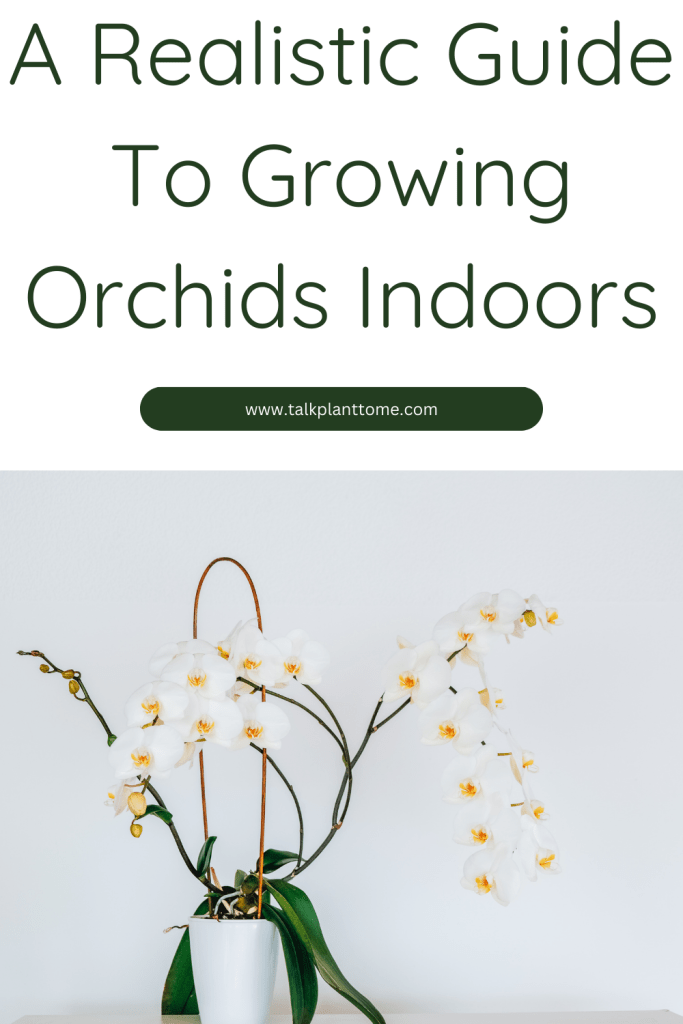
A Realistic Guide To Growing Orchids Indoors
Before we get into the tips I think it’s important to also chat about what makes an orchid unique and why we are doing the steps we are to take care of our orchid!
Orchids are a diverse and elegant family of flowering plants that belong to the Orchidaceae family, one of the largest families of flowering plants in the world. Renowned for their intricate blooms, exotic appearance, and wide variety of shapes, sizes, and colors, orchids are prized by collectors and enthusiasts alike. With over 25,000 species and tens of thousands of hybrids, orchids can be found in nearly every corner of the globe, from tropical rainforests to arid deserts.
Orchid plants typically feature long, slender stems with alternating leaves and clusters of stunning flowers that range in size from tiny blossoms to large, showy blooms. Their flowers come in a myriad of colors, including shades of white, pink, purple, yellow, and orange, often with intricate patterns and markings. Orchids have evolved a remarkable array of adaptations to thrive in diverse environments, from clinging to trees in their native habitats to growing in pots or hanging baskets indoors.
With their exotic beauty and fascinating biology, orchids have captured the hearts of plant enthusiasts for centuries, inspiring countless collectors, breeders, and growers to explore the wonders of this extraordinary plant family. Whether as houseplants, garden specimens, or prized additions to botanical collections, orchids continue to enchant and intrigue people around the world with their unparalleled elegance and allure.
Now that we are all informed about the orchids history and makeup let’s get into the actual tips!

How to grow an orchid:
- Provide the Right Light: Orchids thrive in bright, indirect light. But let’s chat more about what that actually means. Place your orchids near a north or east-facing window where they can receive ample sunlight without being exposed to direct sunlight, which can scorch their delicate leaves. For the most part that means on a wall facing a window but on the other side of the room. You’ll end up with a sunburnt and grumpy orchid if they are placed right in front of a window. Unless that window is positioned in a way (like a building block the sun half the day) that it doesn’t get a lot of direct and bright light.
- Maintain Proper Humidity: Orchids prefer humid environments, similar to their natural habitats in tropical regions. To increase humidity around your orchids, place a humidifier nearby or set their pots on trays filled with pebbles and water. Misting your orchids occasionally can also help maintain moisture levels. But make sure not to over-mist your orchid or unfortunately you can end up with an overwatering situation since that moisture does count towards watering it. So let’s get more into watering it now.
- Water Wisely: Avoid overwatering your orchids, as this can lead to root rot (and we all know how much I despise root rot!) and other issues. Instead, water them sparingly, allowing the potting mix to dry out slightly between waterings. When watering, thoroughly soak the potting mix and allow any excess water to drain away. You can get a moisture meter that can tell you when the solids dry if sticking your finger in the dirt isn’t your thing!
- Use Well-Draining Potting Mix: Orchids require a well-draining potting mix that allows air to circulate around their roots. Use a specialized orchid mix consisting of bark, sphagnum moss, perlite, or coconut husk chips, which mimics their natural growing environment. You can usually get a pre maid special mix seasonally at stores like Lowes and year round at your local plant nursery.
- Provide Adequate Air Circulation: Good air circulation is essential for orchid health, as it helps prevent fungal and bacterial diseases. Ideally just in a room with a ceiling fan that is on at least a few hours a week. If not you can place a small fan nearby to gently circulate air around your orchids, or open windows to promote airflow inside your home.
- Monitor Temperature: Orchids thrive in moderate temperatures, typically between 65-80°F (18-27°C) during the day and slightly cooler at night. Avoid placing your orchids near drafts, air vents, or heaters, as extreme temperature fluctuations can stress the plants. If you have a non air-conditioned part of your house avoid putting your orchid there too.
- Fertilize Regularly: Feed your orchids with a balanced orchid fertilizer diluted to half strength every 2-4 weeks during the growing season (spring and summer). Reduce or stop fertilizing during the dormant period (fall and winter) when orchids like most house plants typically require less nutrients.
- Repot When Necessary: Repot your orchids every 1-2 years or when their potting mix breaks down and becomes compacted. Choose a pot that’s only slightly larger than the current one and use fresh orchid potting mix. Carefully remove the orchid from its old pot, trim any dead roots, and place it in the new pot, ensuring the roots are spread out evenly.
By following these realistic tips for growing orchid plants indoors, you’ll be well on your way to enjoying beautiful blooms and healthy foliage year-round. Remember to observe your orchids closely and adjust your care routine based on their specific needs and growing conditions. With a little attention and care, your orchids will thrive in their indoor environment.
Talk plant to me
If you enjoyed this article on A Realistic Guide To Growing Orchids Indoors then you probably (hopefully!) will enjoy and find these articles helpful as well to read next:
 | Talk Plant To Me |
One thought on “A Realistic Guide To Growing Orchids Indoors”