Have you noticed your beloved Monstera looking a bit sad and droopy lately? Don’t worry, you’re not alone. Many plant parents experience this issue, and the good news is that with a bit of attention and care, your Monstera can bounce back to its vibrant, lush self. Drooping leaves can be a sign of various underlying issues, from watering problems to insufficient light, and it’s crucial to identify the root cause to nurse your plant back to health.
In this article, we’ll explore the most common reasons why your Monstera might be drooping and provide you with practical steps to address each issue. Whether it’s adjusting your watering routine, checking for root rot, or ensuring your plant is getting the right amount of light, we’ve got all the tips you need to revive your Monstera. By following these guidelines, you’ll not only help your plant recover but also prevent future drooping episodes.
So, if you’re ready to turn those sad, droopy leaves into a flourishing canopy of green, read on. Let’s dive into the essential care tips that will make your Monstera thrive again, bringing life and beauty back to your indoor jungle!
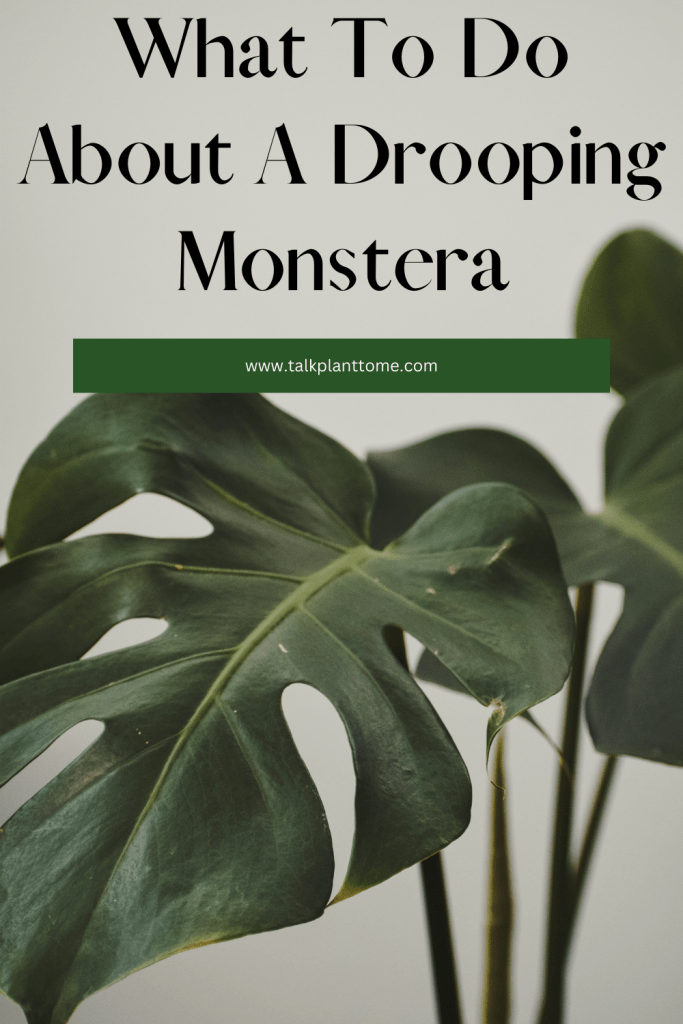
What To Do About A Drooping Monstera
Steps for helping your monstera when it’s droopy:
1. Check Soil Moisture
- Assess Watering: Drooping can be caused by both overwatering and underwatering. Insert your finger about an inch into the soil. If the soil feels dry, the plant needs water. If it’s wet, the plant might be overwatered. Which also can lead to root rot which needs to be addressed asap!
- Adjust Watering: Water the plant thoroughly if the soil is dry, ensuring excess water drains out of the pot. If the soil is too wet, allow it to dry out before watering again. Going forward, water the plant when the top inch of soil feels dry.
2. Inspect for Root Rot
- Root Check: Gently remove the plant from its pot to inspect the roots. Healthy roots are white and firm, while rotting roots are brown and mushy. If they are light brown though don’t worry about that too much, that can and does happen too.
- Treat Root Rot: Trim off any rotting roots with sterilized scissors and repot the plant in fresh, well-draining soil. Ensure the pot has drainage holes to prevent future waterlogging.
3. Evaluate Lighting Conditions
- Light Needs: Monsteras thrive in bright, indirect light. Ensure your plant is receiving adequate light, but not direct sunlight, which can scorch its leaves. I have an article here about finding the best place in your home for your monstera plant: Where should I put a Monstera in my home?
- Adjust Placement: If your plant is in low light, move it closer to a window where it can receive more indirect sunlight. If it’s in direct sunlight, move it to a spot with filtered light.
4. Check Humidity Levels
- Humidity Requirements: Monsteras prefer higher humidity levels. Low humidity can cause the leaves to droop and edges to brown.
- Increase Humidity: Use a humidifier, place a tray of water near the plant, or mist the leaves regularly to boost humidity around the plant. Grab a mister and try misting your monstera at least once a week in-between watering.
5. Examine for Pests
- Pest Inspection: Look for signs of pests like spider mites, aphids, or scale on the leaves and stems. These pests can weaken the plant and cause drooping. Make sure to check the underside of the monstera leaves to check for additional signs of pest damage (holes, dark spots, webs, and the actual bodies of the pests).
- Treat Pests: If you find pests, treat the plant with insecticidal soap or neem oil according to the product instructions.
6. Ensure Proper Temperature
- Optimal Temperature: Monsteras prefer temperatures between 65-85°F (18-29°C). Avoid placing the plant near drafts, air conditioners, or heaters. In general the worst temperature thing you can do to your monstera plant is allow inconsistent temperatures regularly.
- Stable Environment: Ensure the plant is in a stable environment without sudden temperature fluctuations.
7. Fertilize Appropriately
- Nutrient Needs: Lack of nutrients can cause the plant to droop. Feed your Monstera with a balanced, water-soluble fertilizer every 4-6 weeks during the growing season (spring and summer).
- Avoid Over-Fertilizing: Follow the fertilizer’s instructions carefully to avoid over-fertilization, which can harm the plant. It sounds silly but your monstera can’t actually handle too many extra nutrients it can stunt its growth and cause drooping too.
8. Prune and Support
- Remove Damaged Leaves: Trim off any damaged or yellowing leaves to encourage new growth.
- Provide Support: Monsteras are climbers and may need support to grow upright. Use a moss pole or stake to help the plant stand tall and grow properly.
9. Monitor and Adjust Care Routine
- Regular Monitoring: Keep an eye on your Monstera’s condition and adjust its care routine as needed. Consistent attention will help you catch and address issues early.
By following these steps, you can help your Monstera recover from drooping and return to a healthy, vibrant state. Happy plant parenting!

Talk Plant To Me
If you enjoyed this article on What To Do About A Drooping Monstera then you probably (hopefully!) will enjoy and find these articles helpful as well:
- Every Step You Should Take To Clean Monstera Leaves
- My Best Tips For Growing A Zucchini Plant In Your Garden
- The First 3 House Plants I would Start With
- 7 Reasons Your Monstera Plant Isn’t Growing
- Tropical House Plants That Will Make Your Home Feel Like a Resort
- Where should I put a Monstera in my home?
 | Talk Plant To Me |