
There’s nothing quite like the satisfaction of biting into a crisp, fresh cucumber that is STRAIGHT from your own garden! Whether you’re a pro gardener or just starting out, cucumbers are a fantastic addition to your vegetable garden. They’re not only delicious and versatile but also relatively easy to grow with the right care and attention.
However, like any plant, cucumbers have their specific needs and preferences that can make all the difference between a bountiful harvest and a disappointing growing season. Which is not what any of us want!!
So today we’ll get into some essential tips for growing cucumbers in your garden. From selecting the right variety and preparing your soil to watering techniques and pest management, we’ve got you covered. These tips will help you create the ideal conditions for your cucumber plants to thrive, ensuring you enjoy a plentiful supply of this refreshing veggie throughout the growing season.
So, if you’re ready to take your gardening skills to the next level and reap the rewards of homegrown cucumbers, read on. Let’s dive into the best practices and expert advice that will turn your garden into a cucumber paradise!!
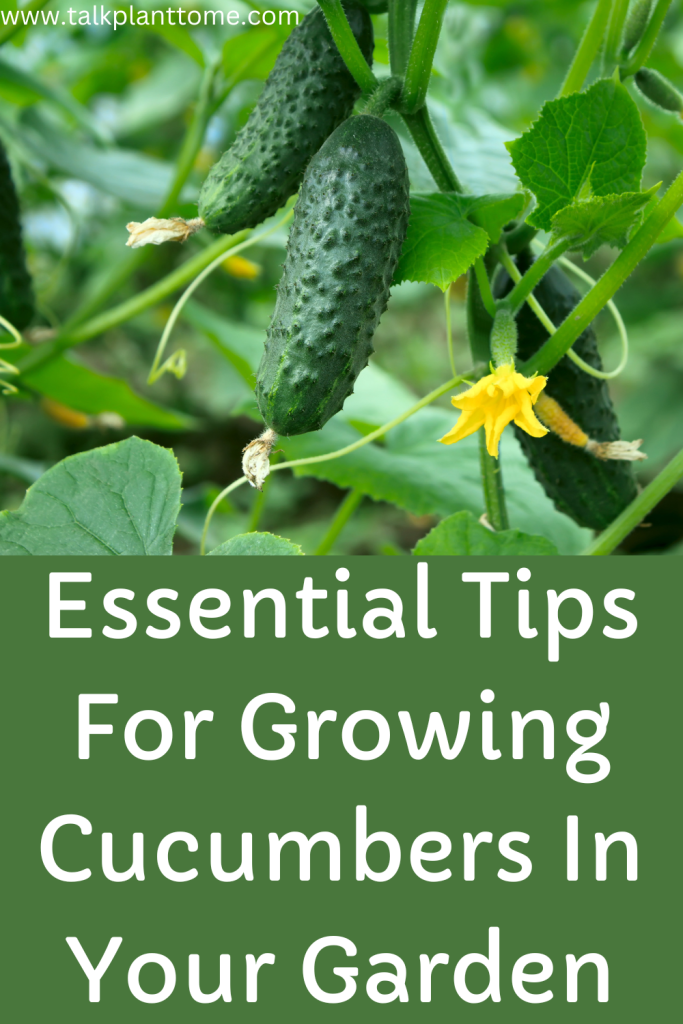
Essential Tips For Growing Cucumbers In Your Garden
Cucumber growing tips and tricks:
1. Choose the Right Variety
- Types: There are several types of cucumbers, including slicing, pickling, and burpless varieties. Choose the variety that best suits your needs.
- Marketmore 76: A classic slicing cucumber with dark green skin and they are super disease resistance aka perfect for dependable summer harvests.
- Lemon Cucumber: Round and yellow like a lemon, this heirloom variety is crisp, mild, and adds a fun twist to your garden and salads. Also I love how unique yet delicious they are!
- Pickling Cucumbers (Boston Pickling): Short, chubby, and bumpy-skinned which makes them ideal for homemade pickles and crunchy snacking straight from the vine.
- Burpless Cucumber (Tasty Green or Sweet Success): Thin-skinned and low in bitterness, these are easy on the tummy 🙂 and super juicy, perfect for fresh eating.
- English Cucumber (Telegraph or Long European): Long and honestly so pretty with thin skin and minimal seeds, these are greenhouse favorites often found in grocery stores.
- Parisian Pickling (a.k.a. Cornichon): Small and crunchy with just the right snap for those classic French-style mini pickles.
- Diva Cucumber: Seedless, sweet, and tender, this variety thrives without pollination and makes for a snackable garden treat.
- Straight Eight: A popular heirloom that produces consistently straight, smooth-skinned cucumbers about 8 inches long.
- Climate Adaptation: Select varieties that are well-suited to your local climate conditions. Make sure to learn your garden zone before you pick your cucumbers to grow – opt for variations that thrive the best in your zone.
2. Planting Time
- Warm Soil: Cucumbers thrive in warm soil. Plant them outdoors after the danger of frost has passed and the soil has warmed to at least 70°F (21°C). If you plant them too early the ground can be too cold, and you could also be risking a freeze happening. And cucumbers are not hearty enough to survive even one freeze unfortunately!
3. Location
- Full Sun: Choose a sunny location that receives at least 6-8 hours of direct sunlight daily.
- Well-Drained Soil: Ensure the soil is well-drained and rich in organic matter. Cucumbers prefer slightly acidic to neutral soil (pH 6.0-7.0). For more tips on soil needs for veggie gardens check out this article next: 8 Helpful Things To Add To Vegetable Garden Soil!
4. Soil Preparation
- Compost: Amend the soil with compost or well-rotted manure to improve fertility and drainage. This is also a great way to re-use any uneaten food/scraps in your home. It’s a win-win!
- Raised Beds: Consider using raised beds if your soil is heavy or clayey to enhance drainage.
5. Planting Techniques
- Direct Sowing: Sow seeds directly in the garden about 1 inch deep and 6-12 inches apart in rows that are 3-5 feet apart. Remember that cucumbers are pretty large when grown with unlimited growing time and the right environment- so you don’t want them blocking each others growth.
- Transplants: If using transplants, plant them at the same depth they were growing in their pots.
6. Watering
- Consistent Moisture: Keep the soil consistently moist but not waterlogged. Cucumbers need about 1 inch of water per week, more during hot, dry periods. If you are experiencing a lot of hot days I would recommend doing at least .5 inch of water every other day. But your soil and cucumbers will tell you- the leaves will start to droop and wilt if they are not getting enough water.
- Watering Method: Water at the base of the plants to avoid wetting the foliage, which can lead to disease.
7. Mulching
- Organic Mulch: Apply a layer of organic mulch, such as straw or shredded leaves, to retain soil moisture, suppress weeds, and regulate soil temperature. But remember- don’t put dyed mulch on food that is being grown!
8. Support
- Trellising: Use a trellis or cage to support vining cucumber varieties. This keeps the fruit off the ground, reduces disease risk, and makes harvesting easier.
9. Fertilization
- Balanced Fertilizer: Use a balanced fertilizer (e.g., 10-10-10) at planting time and side-dress with compost or a balanced fertilizer every 3-4 weeks during the growing season.
- Avoid Over-Fertilizing: Excessive nitrogen can lead to lush foliage but fewer fruits.
10. Pest and Disease Control
- Regular Inspection: Check plants regularly for signs of pests like cucumber beetles, aphids, and spider mites. Use insecticidal soap or neem oil if needed.
- Disease Prevention: Rotate crops annually to prevent soil-borne diseases. Ensure good air circulation by spacing plants adequately and using trellises.
11. Pollination
- Encourage Pollinators: Plant flowers nearby to attract bees and other pollinators, which are essential for cucumber fruit set. Bees are our friends when we are gardening!
- Hand Pollination: If pollinator activity is low, consider hand-pollinating flowers by transferring pollen from male to female flowers using a small brush.
12. Harvesting
- Regular Picking: Harvest cucumbers regularly when they reach the desired size. Overripe cucumbers can become bitter and may reduce the plant’s productivity.
- Proper Cutting: Use a sharp knife or scissors to cut cucumbers from the vine, leaving a small portion of the stem attached.
13. Continuous Care
- Monitor Growth: Keep an eye on your plants throughout the growing season. Address any issues promptly to ensure healthy growth.
- Prune if Necessary: Remove any dead or diseased leaves to improve air circulation and reduce disease risk.
These helpful tips for growing cucumbers can help you grow more, healthier, and even larger cucumbers that you can enjoy throughout the growing season! Best of luck with your gardening and cucumber growing.
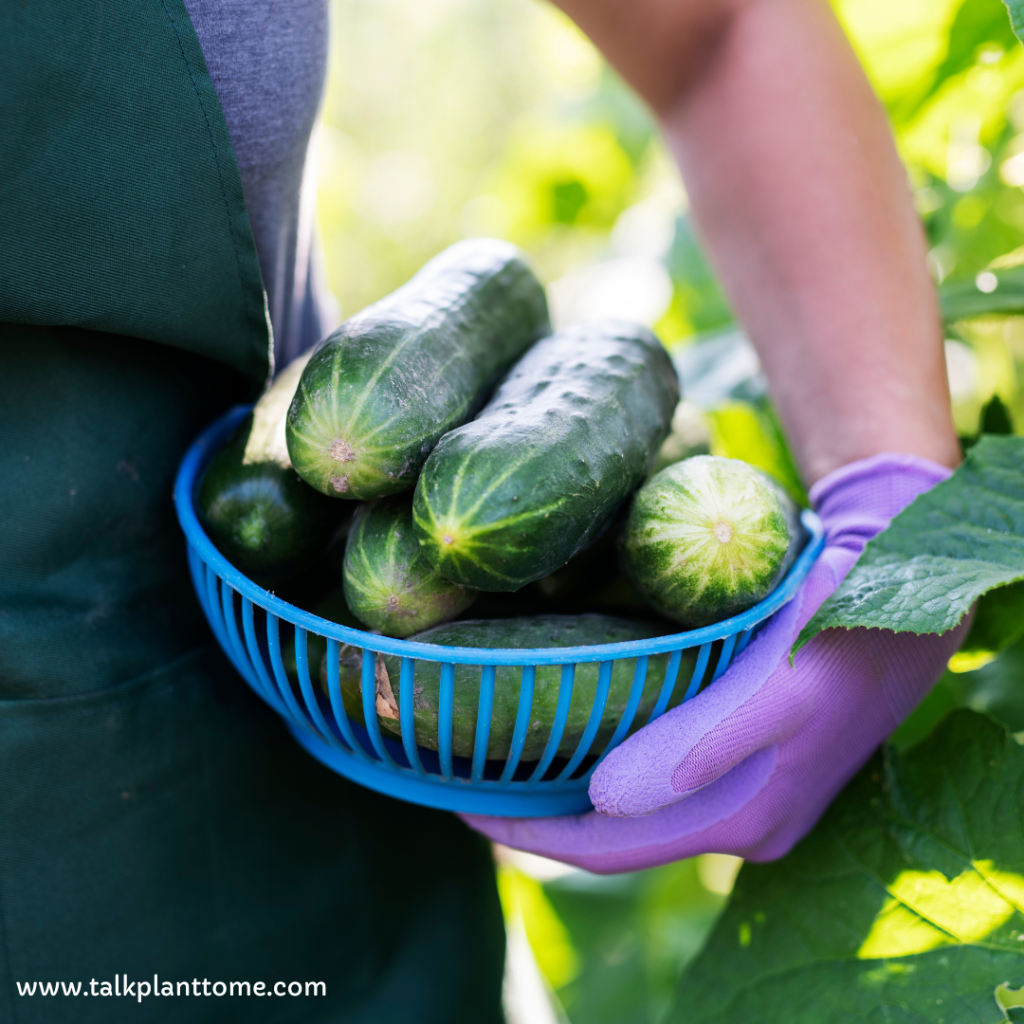
Talk Plant To Me
If you enjoyed this article on Essential Tips For Growing Cucumbers In Your Garden then you probably (hopefully!) will enjoy and find these articles helpful as well:
 | Talk Plant To Me |