If you’re anything like me, you’re always on the hunt for unique and low-maintenance houseplants to add to your collection. Enter the ponytail palm—a quirky, charming plant that’s as easy to care for as it is eye-catching. With its bulbous base and cascading, strap-like leaves, the ponytail palm (formally known as Beaucarnea recurvata) is sure to become the star of your indoor house plant jungle.
Plus, it’s the perfect companion for those of us who sometimes forget to water our plants (no judgment here!) but we will chat more about that in a second!
In this ultimate care guide, I’m going to share all the tips and tricks you need to keep your ponytail palm thriving. From understanding its light and watering needs to choosing the right soil and pot, I’ve got you covered. Whether you’re a seasoned plant parent or a green-thumb newbie, this guide will help you master the art of ponytail palm care with confidence and ease.
So, grab your gardening gloves and get ready to dive into the wonderful world of ponytail palms. By the end of this read, you’ll have all the knowledge you need to ensure your new leafy friend not only survives but truly thrives. Let’s turn your home into a lush, tropical paradise—one ponytail palm at a time!
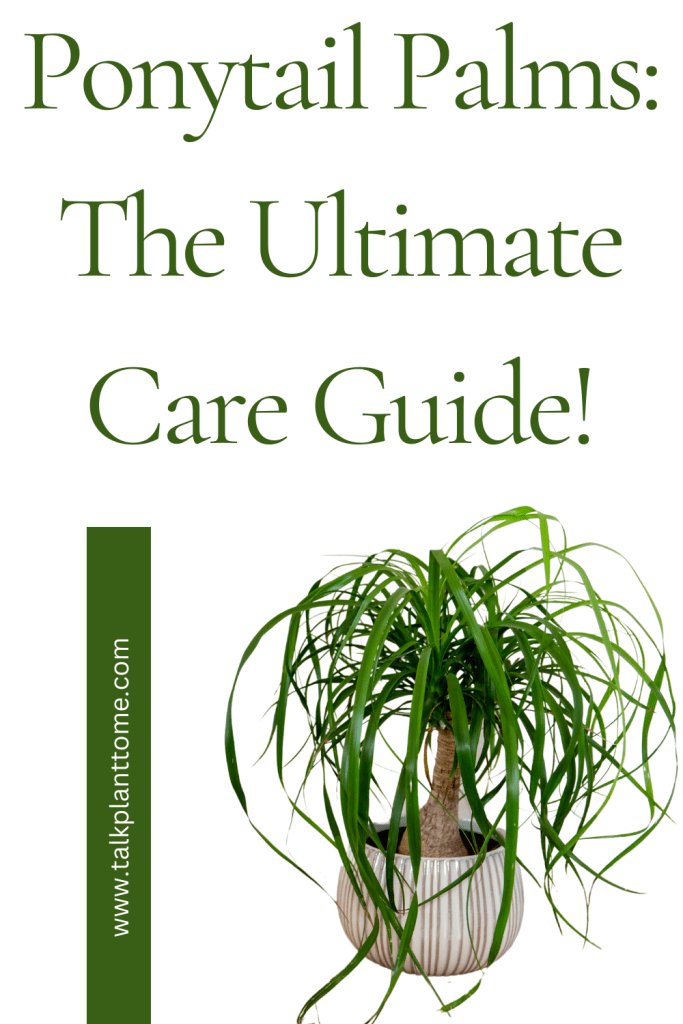
Ponytail Palms: The Ultimate Care Guide!
Tips for growing a ponytail palm:
1. Light Requirements
Ponytail palms thrive in bright, indirect light but are quite adaptable. They can handle lower light conditions, although their growth may slow down. If you want to see your ponytail palm flourish, place it near a south or west-facing window where it can bask in plenty of natural light. Just be sure to protect it from direct sun rays, which can scorch its leaves.
You will be able to tell if your ponytail palm is getting the right amount of light. Here’s how-
If the plant is getting too much direct, bright light it will start to get crispy on the edges. Virtually it will be (and will appear to be!) sunburnt from too much light. If this happens make sure to move your ponytail palm to a different location within your home.
If the plant however is getting too little light it will be droopy and weak looking. Your ponytail palm needs a decent amount of natural light to not only thrive but just to survive. So if you are watering the plant plenty but it still looks droopy and lacking life then it’s time to move it to somewhere that it will get more natural light exposure.
2. Watering Schedule
One of the best things about ponytail palms is their drought tolerance. These plants store water in their bulbous bases, so they don’t need frequent watering. Allow the soil to dry out completely between waterings. Overwatering is a common mistake and can lead to root rot, so when in doubt, it’s better to lean on the side of underwatering.
Remember that root rot is nearly impossible to “cure” once it has spread but brining a plant back from underwatering is much more feasible!
3. Soil and Potting
Ponytail palms prefer a well-draining soil mix, similar to what you’d use for succulents or cacti. You can make your own mix by combining standard potting soil with sand or perlite to improve drainage. Ensure the pot has drainage holes to prevent water from accumulating at the bottom, as soggy soil can harm the plant’s roots.
A pot that also retains but still drains through water is also a great thing to keep in mind.

4. Temperature and Humidity
Ponytail palms are pretty low-maintenance when it comes to temperature and humidity. They thrive in average household temperatures between 60-80°F (15-27°C). They can tolerate dry indoor air, making them perfect for homes with low humidity. Just keep them away from drafty windows and cold air in winter, as they prefer to stay warm.
Note- try to keep any plants away from vents that blow air (hot or cold) or radiators because those shifts in temperature are more extreme right there and that can damage not only a ponytail palm plant but basically any and all house plants will be stressed and damaged by that location.
5. Fertilizing
Fertilize your ponytail palm sparingly. During the growing season (spring and summer), feed it with a balanced, water-soluble fertilizer every 4-6 weeks. Be cautious not to over-fertilize, as this can lead to nutrient burn. In the fall and winter, reduce feeding since the plant’s growth naturally slows down.
Don’t over fertilize because you aren’t seeing growth, fertilization is a long game situation not a way to immediately see new leaves!
6. Pruning and Maintenance
Ponytail palms thankfully require minimal pruning. Which we all know I love in a plant, that helps them be much more manageable and an easy plant for those of us with busy lives.
You can trim off any brown or dead leaves to keep the plant looking tidy. If the plant outgrows its space, you can repot it into a slightly larger container. However, these plants enjoy being somewhat root-bound, so repotting isn’t necessary more than every couple of years. Again, making this low maintenance plant a champion in my book.
7. Pests and Problems
Ponytail palms are generally pest-resistant, but occasionally, they can be bothered by mealybugs or spider mites. If you notice any pests, treat the plant with insecticidal soap or a neem oil solution. Regularly dusting the leaves and inspecting the plant can help catch any issues early.
Want help identifying the pest on your plant (s)? Check this out next – The 5 Most Likely Pests To Be On Your House Plants

With these tips in mind, your ponytail palm will not only survive but thrive, becoming a striking and low-maintenance addition to your indoor plant collection. Happy growing!
Talk Plant To Me
If you enjoyed this article on Ponytail Palms: The Ultimate Care Guide! then you probably (hopefully!) will enjoy and find these articles helpful as well:
 | Talk Plant To Me |