The weeping fig is a stunning plant that catches everyone’s eye when they enter a room with one. Though they can be a bit of a dramatic pain sometimes they are totally worth the effort because once you master growing a weeping fig (it’s government name is Ficus benjamina) you will have the most beautiful plant for years and years to come.
But in order to have that you gotta learn how to not only keep a weeping fig alive but also how you can really help it thrive.
So below we go into all the details you need to know, and make sure to bookmark this guide to reference back to while you are learning!
Now let’s get into it-
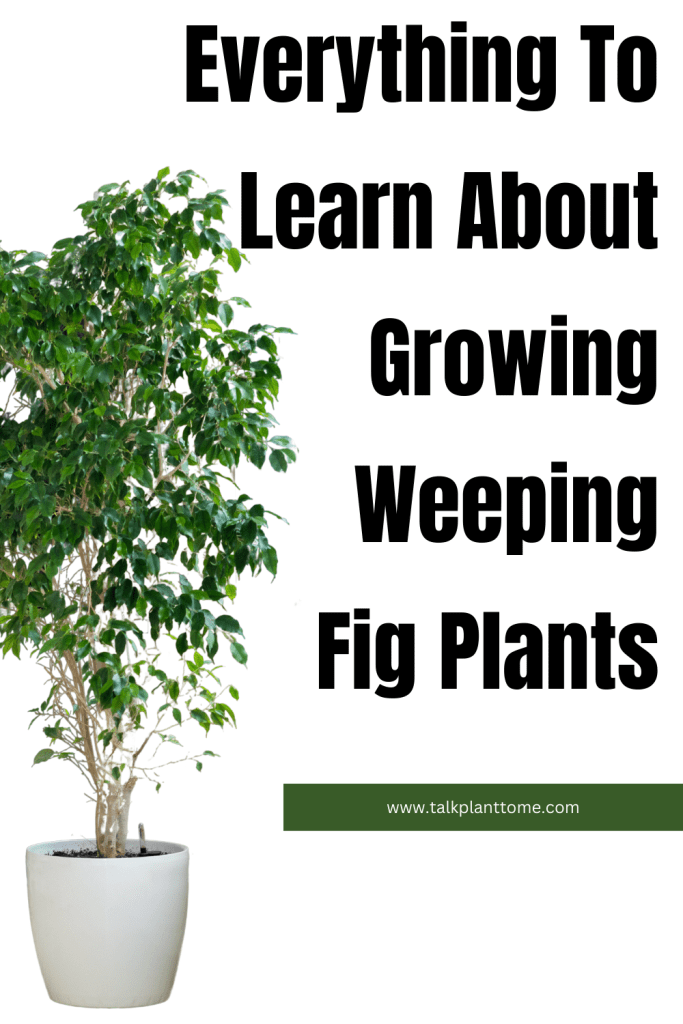
**Stock image! Knowledge gained from years working in the agriculture/greenhouse industry and related plants/research and all opinions below are my own!
Everything To Learn About Growing Weeping Fig Plants
Weeping Fig Care Guide:
Light Requirements
Weeping Figs thrive in bright, indirect light but can also tolerate (more like survive) some direct sunlight if you slowly introduce them to more and more light. Suddenly putting a weeping fig in front of a bright and direct source of light will freak it out!
A spot near a window with filtered sunlight is ideal, as too much direct sun can basically sunburn the leaves, while too little light may cause leaf droop and look so sad.
If your plant is positioned in low light for an extended period, it may become leggy and look pretty sparse. In homes with limited natural light, a grow light can help supplement its needs and maintain healthy growth.
Watering Schedule
Now let’s chat about watering your gorgeous plant!
Proper watering is essential for the health of a Weeping Fig. They prefer evenly moist soil but guys they also HATE to be soaked all the time.
It is best to water when the top one to two inches of soil feel dry (stick your finger in the soil up to your 2nd knuckle- if you feel moisture don’t water yet!).
During the growing season, which generally is in spring and summer, watering may be needed more frequently. While in fall and winter, the plant will require less water as its growth slows
Overwatering can lead to root rot (which you guys know is my personal nightmare), while underwatering may cause leaf drop. Using room-temperature, filtered water is recommended to avoid shocking the plant.
Temperature and Humidity Needs
As a tropical plant, the Weeping Fig thrives in warm temperatures in your home. Think generally along the lines of this- if a Floridian would complain your home is too cold then it’s too cold for the fig!
It is also sensitive to sudden temperature fluctuations, so it should be kept away from drafts, ac vents, and heating radiators.
High humidity is beneficial for this plant, as dry air can cause leaf drop and crispy leaf edges. Misting the leaves occasionally, placing a humidifier nearby, or using a pebble tray with water can help keep the right humidity levels.
Soil and Potting Mix
Weeping Figs prefer well-draining, aerated soil. A solid potting mix combined with perlite and peat moss works well to provide the right balance of drainage and moisture retention.
It is also super important to choose a pot with drainage holes to prevent all the extra water from sitting at the bottom, as prolonged exposure to standing water can lead to root rot. When repotting, selecting a pot that is only one to two inches larger than the current one will help avoid excessive soil moisture retention.
Fertilizing for Healthy Growth
Regular fertilization helps support the growth and health of a Weeping Fig.
A balanced liquid fertilizer, like a 10-10-10 formula, applied once a month during the growing season will give your weeping fig the essential nutrients it’s craving. But, fertilizing should be stopped in fall and winter when the plant’s growth slows down
Over-fertilization can damage the roots and cause leaf burn, so it is best to dilute the fertilizer according to package instructions. For those who prefer organic options, diluted compost tea or seaweed extract can also be used!!
Pruning and Maintenance
Pruning helps maintain the shape of a Weeping Fig while encouraging some fuller growth.
The best time to prune is in early spring before the plant enters its active growing season. Removing dead, yellowing, or damaged leaves allows the plant to direct its energy toward healthy new growth. Regularly wiping the leaves with a damp towel not only keeps them clean but also helps prevent pest infestations. Also, since this plant can grow really freaking tall, shaping it through occasional trimming can keep it manageable in an indoor space.
Repotting and Growth Rate
The weeping fig is generally a moderate to even fast paced growing plant. Which means that it may need to be repotted every two to three years.
Repotting should be done when the roots start to outgrow the current container or when water drains too quickly due to compacted soil. When transferring to a new pot, refreshing the soil and trimming any overly long roots can encourage healthier growth. It’s also a great time to check out the health of the roots and search for any annoying bugs that could be chilling in the soil.
Common Problems and Pests
One of the most common issues with them is leaf dropping, which often occurs due to environmental stress like if there is changes in light, temperature fluctuations, or inconsistent watering. Keeping the plant’s conditions stable is essential to preventing unnecessary leaf loss. Overwatering can lead to yellowing leaves and root rot, while dry air may cause brown leaf tips. Which none of us want obviously!
Pests like spider mites, mealybugs, and scale insects can sometimes infest weeping figs, especially in dry conditions. Regularly inspecting the plant and wiping the leaves with neem oil or insecticidal soap can help prevent infestations. If pests are detected, isolating the plant and treating it promptly will prevent the issue from spreading to other houseplants. Quarantine is essential in general when you suspect any pest problems.
Can Weeping Figs Be Grown Outdoors?
Weeping Figs can be grown outdoors in warm climates where temperatures literally never drop below 50 degrees Fahrenheit. They are can thrive on patios, balconies, or garden spaces in USDA zones 10 to 12. When placed outside, they should be positioned in partial shade to avoid excessive sun exposure. If grown in a pot, they can be brought indoors during colder months to prevent damage from frost!!
Propagation Methods
Propagating a Weeping Fig is pretty easy and can be done through stem cuttings.
To propagate, take an about 5 inch cutting from a stem with the lower leaves removed. The cutting can be placed in either water or moist soil and kept in bright, indirect light (I prefer the water method). In about four to six weeks, roots should begin to develop, at which point the cutting can be transplanted into a small pot.
Using rooting hormone can improve the chances of successful propagation.
Well guys now that we have chatted all about weeping figs I hope you are feeling confident about your plant parent skills and know that I have total faith in you!!
Talk Plant To Me
If you enjoyed this article on Everything To Learn About Growing Weeping Fig Plants then you probably (hopefully!) will enjoy and find these articles helpful as well:
 | Talk Plant To Me |