I am going to be totally real with you guys- prayer plants and I did not get along for a long time. For the first few years of my plant parent journey I could not keep one alive for more than a few months to save my (and it’s lol) life. But I FINALLY got it down to a science and me and prayer plants are besties now. But I want to save you from all that heartache by sharing my best and honest tips for growing a prayer plant.
So let’s jump into it so you can get to properly caring for your beautiful plant-

My Best Tips For Growing a Prayer Plant!
Prayer plant indoor care guide:
What is a prayer plant?
So the formal name (I love calling it their government name) is Maranta leuconeura. They are beautiful plants from the arrowroots family which also means that they are truly tropical plants. Only natively found in tropical climates and guys that is important to remember as we get into the actual prayer plant tips!
Prayer Plant lighting needs:
Alright now first things first, lighting needs gotta be met for prayer plants or they turn into complete drama queens (won’t perk up, limp leaves, etc).
Creating the ideal light conditions: Prayer Plants prefer bright and indirect light. A spot near an east or north-facing window is ideal, where the light is soft and diffused. If you start to see sunburn (brown crispy edges but not limp) then your prayer plant is too close to a light source so move it further. Or get shear curtains for that window which beautifully filters lights for your plants in that room.
Also- too much light can also make that iconic color pattern on the leaves fade away which is tragic!
Watering 101:
Alright now for their watering needs-
Water Requirements: Keep the soil consistently moist during the growing season (spring and summer). Water when the top inch of soil feels dry to the touch. You can use the knuckle rule to easily do this- just stick your finger in till the first knuckle- if the tip of your finger feels dry then your prayer plant is thirsty.
Pro tip: Use lukewarm water to avoid shocking the plant, and ensure the pot has good drainage to prevent water-logging, which can lead to root rot. Remember that these are pretty dramatic plants and too cold of water they will freak out a bit and the less stress you can give your prayer plant the better it will thrive.
Humidity + temperature are essential:
Humidity: Prayer Plants thrive in high humidity environments. Aim for 60% humidity or higher which btw check if your thermometer tells you the humidity in your home. If not you can get them online so you know because it’s so helpful for a lot of plants PLUS our health as humans 🙂 But if your home is on the drier side make sure to use a humidifier. Or go old school and put the plant on a tray filled with pebbles and water which will increase humidity around it.
Temperature: Keep your Prayer Plant in a warm environment where temperatures are between 60-80°F (for my non-americas readers because we’re weird that’s 16-27°C). Avoid sudden temperature changes and drafts.
Soil and fertilizing tips:
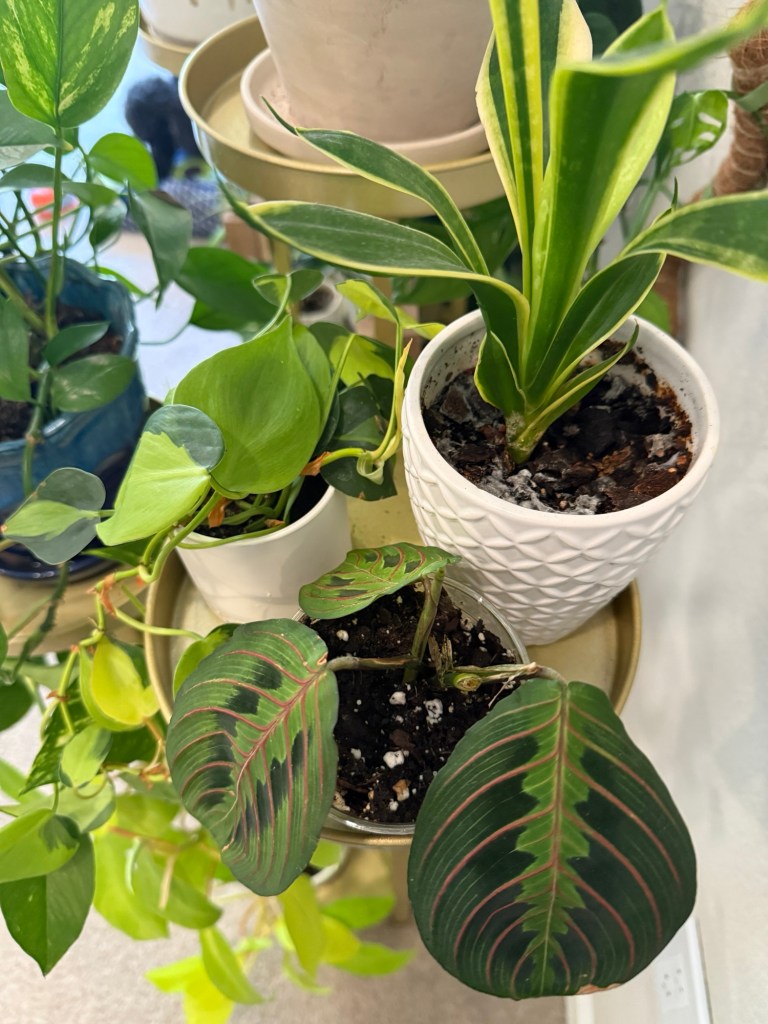
Soil: Use a well-draining, ideally slightly acidic soil mix. To do that- a mix designed for African violets which is easy to find at plant stores/nurseries can work well, or blend perlite, peat moss, and regular potting soil.
Fertilizing: Feed your Prayer Plant every two weeks during the growing season (spring into early summer) with a balanced, water-soluble fertilizer diluted to half the recommended strength. Reduce feeding in the fall and winter when the plant’s growth slows down.
What about pruning and maintenance:
This isn’t always the funnest part but you gotta maintain your prayer plant. But maintenance is essential for keeping them healthy and thriving!
Pruning: Regularly trim away yellow or brown leaves to keep the plant looking tidy and to encourage new growth. And guys please please please remember to always use clean and sharp scissors or shears to avoid damaging the plant or transferring diseases.
Cleaning: Gently wipe the leaves with a damp cloth to remove dust, which can hinder the plant’s ability to photosynthesize effectively.
Which leads to repotting:
When to Repot: Prayer Plants typically need to be repotted every 1-2 years to refresh the soil and accommodate root growth. Spring is the best time for repotting.
How to Repot: Choose a pot that is one size larger than the current one. Carefully remove the plant, loosen the roots, and replant it at the same depth it was previously.
Can’t forget pest and disease managing:
This is the saddest part of the prayer plant care guide but it’s not one that we can skip so let’s quickly chat by
Common Pests: Keep an eye out for spider mites, aphids, and mealybugs. If you spot pests, treat the plant with insecticidal soap or neem oil.
Disease Prevention: Avoid overwatering and ensure good air circulation around your plant to prevent fungal diseases. Remember to always quarantine your new plants for at least 2 weeks so if they did get infested wherever they lived before then you aren’t risking all of your other beloved plants!
How to propagate a prayer plant:
And we’re gonna end on a happier note than pests and disease…. propagation!
How to: Prayer Plants can be propagated by division or by rooting stem cuttings in water. To divide, gently separate the roots during repotting and plant each clump in its own pot.
And for cuttings, snip a piece of stem with a few leaves, place it in water, and wait for roots to develop before potting it in soil.
Talk Plant To Me
If you enjoyed this article on My Best Tips For Growing a Prayer Plant then you probably (hopefully!) will enjoy and find these articles helpful as well:
 | Talk Plant To Me |