With a name that matches the vibe perfectly you are also going to fall in love with ring of fire philodendrons! Named for the iconic yellow and red that the leaves start as until they mature into the beautiful plants we love. And such a gorgeous and fun plant deserves to not just live in your home but THRIVE in your house. Which is why today we are going to chat all things ring of fire philodendrons.
So grab your shears, watering can, and head to your local nursery if you don’t already have one because after reading this guide you are going to be ready to grow one. Let’s get into it-
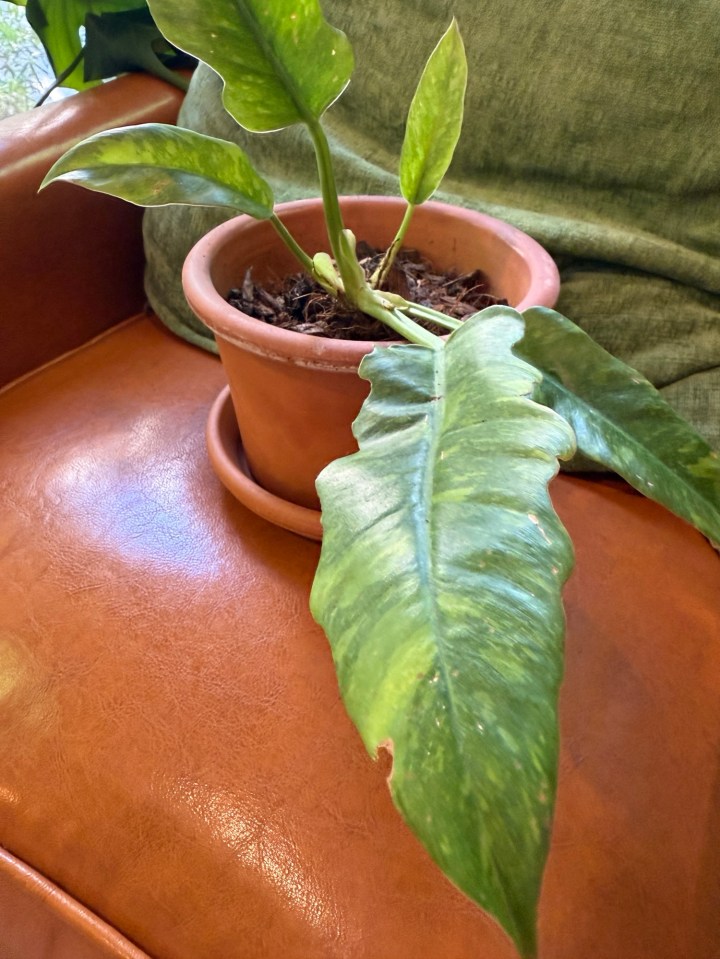
(and yeah, I haven’t gotten a good picture of a new leaf yet but it’s SO PRETTY, don’t let my bad memory stop you from this stunning plant!!)

Ring of Fire Philodendron Care Guide: everything to know!
Ring of fire light needs:
Let’s start by chatting about their light needs because they thrive the most when you find a specific sweet spot. That sweet spot is bright but indirect light. What does that mean?! It means a window that gets a lot of light should be within 10ish feet of the philodendron BUT ideally it is filtered through shear curtains or at least closer to 5-10 feet from the window if there isn’t a curtain option to filter the light.
Ideally a north or west facing window is perfect but they aren’t that picky like others (looking at you fiddle leaf figs) and they can survive with just grow lights. Aim for 10ish hours a day of light if you are opting for a grow light situation!
Too much bright light with nothing filtering it can torch the leaves leading them to being crispy and browning. But too little light will stop it from forming those beautiful orange and red new leaves. Too little light also typically means we end up overwatering them and they HATE being overwatered.
Let’s chat more about watering needs now-
Watering tips:

As we were saying, ring of fire philodendrons don’t handle being overwatered well but they also will be dramatic if they are too thirsty.
So what does that mean? It means you gotta do the knuckle test!! Stick your finger into the dirt down until your middle knuckle is at the top of the soil. If the tip of your finger feels moisture then leave them alone they are plenty quenched. But if your finger is dry it’s time to water them.
In general though you are going to be better off opting on the side of too little water and risk drooping leaves compared to too much which can lead to the dreaded root rot which is basically the end of any plant.
Temperature run down:
Next up we need to quickly talk about temperature needs. Overall, they aren’t too dramatic about the temperature- basically if your home is a comfortable temperature for humans to be in then it’s probably pretty good for your philodendron!
That being said, so many of us are tempted to turn off heat/ac while we are gone. And yeah that can save you some money but allowing extreme temperature fluctuations in your home is going to result in some really upset and quite possible dead house plants. So just keep that in mind!!
Humidity guide:
They are tropical plants which means they loveee humidity. But thankfully there are a lot of easy ways to keep the humidity up and keep your philodendron happy.
Option 1: misting! Grab a spray bottle and mist your ring of fire once or twice a week.
Option 2: a pebble tray- using a pebble tray (plant saucer filled with rocks/pebbles and water) is the easiest in my opinion.
Option 3: a humidifier! Use a humidifier in the room you keep tropical plants so they can thrive just like in the jungle!!
What soil helps them thrive?
They aren’t too dramatic about soil but in general you want it to be well draining and chunky. Yeah I said chunky lol! If you look at my pictures you’ll see wood chips mixed into the soil that helps give it that chunky effect that allows water to slide naturally and helps to prevent root rot which happens when too much water sits around the roots.
And you can easily DIY a mix that’ll help your ring of fire thrive: 1 part potting soil + 1 part orchid bark + 1 part perlite!
Ring of fire fertilizing 101:
Time to chat about the dreaded conversation of fertilizing. Why do all of us plant parents despise fertilizing so much?! I know it isn’t just me.
But back on track- during growing season (spring and summer) fertilize monthly and make sure it’s a water soluble one. During the slow growth months (fall and winter) skip fertilizing or it might be too much for you philodendron to handle.
Pruning advice:
Prune off any yellowing or browning leaves because they suck nutrients from the healthy leaves! Getting them off will help your ring of fire focus its energy on the right things! Pruning can also help your plant grow in the shape you want as well.
Propagating your ring of fire philodendron:
There are two options for propagating them-
Option 1: a node- you can successfully propagate with a node cutting in water BUT it’s not all that reliable and in my experience will only grow new roots about 50% of the time.
Option 2: roots- this is the more reliable option though it’s more work! A leaf with roots on the stem put into water or moss is how you’re going to most reliably propagate them.
The 101 on pests:
Spidermites and mealy bugs are their biggest enemy. Shockingly with how the soil is gnats don’t seem to love them too much which personally I adore! But spider mites are a different and super annoying situation. But usually neem oil every day for a week-ish will take care of the problem!
Bonus tips:
- They are slow openers so when a new leaf appears do not intervene! Let them unfurl at their own rate and don’t ever try to use your hands to “help them” because they unfurl when they are ready and the oils on our hands can ruin the poor new leaf!
- Keep your ring of fire away from drafts aka a window or door you keep open a lot or air vents on the floor or ceiling! They will get crispy and annoyed with blowing air and temp. changes that come along with that. This is generally true for most plants so always keep that in mind when placing house plants.
- Moss poles can be used to help them climb vertically and not put as much stress on the stems from weight of growing leaves!
Talk Plant To Me
If you enjoyed this article on Ring of Fire Philodendron Care Guide: everything to know then you probably (hopefully!!) will enjoy and find these articles helpful as well:
 | Talk Plant To Me |