Picture this: you’re sitting in your cozy living room, admiring the lush greenery of your indoor plants. Suddenly, a tiny winged intruder catches your eye, darting around your prized fern like a miniature daredevil. Ah, the notorious gnat! These pesky little bugs have a knack for wreaking havoc on our beloved house plants, turning our indoor oasis into a buzzing annoyance. But fear not, fellow plant enthusiasts! In this guide, we’ll delve into the world of gnat infestations and equip you with simple yet effective methods to bid those bothersome bugs adieu. So, roll up your sleeves, grab your watering can, and let’s reclaim your plant haven from the clutches of those persistent gnats!
What are gnats though?
Gnats are small, flying insects that are attracted to moist, warm environments. They’re most commonly found in houseplants, but they can also be found in other moist areas, such as compost piles and bathrooms.
There are many different types of gnats, but the most common ones that affect houseplants are fungus gnats and fruit flies.
- Fungus gnats are small, black or brown flies that are about 1/8 inch long. They have long legs and transparent wings. Fungus gnats lay their eggs in moist soil, and the larvae feed on fungi and organic matter in the soil. This can damage the roots of your plants, which can lead to wilting, yellowing leaves, and stunted growth.
- Fruit flies are also small, black or brown flies, but they are slightly larger than fungus gnats. They have red eyes and clear wings. Fruit flies lay their eggs in decaying fruit or other organic matter. The larvae feed on this material, and they can also damage the roots of your plants.
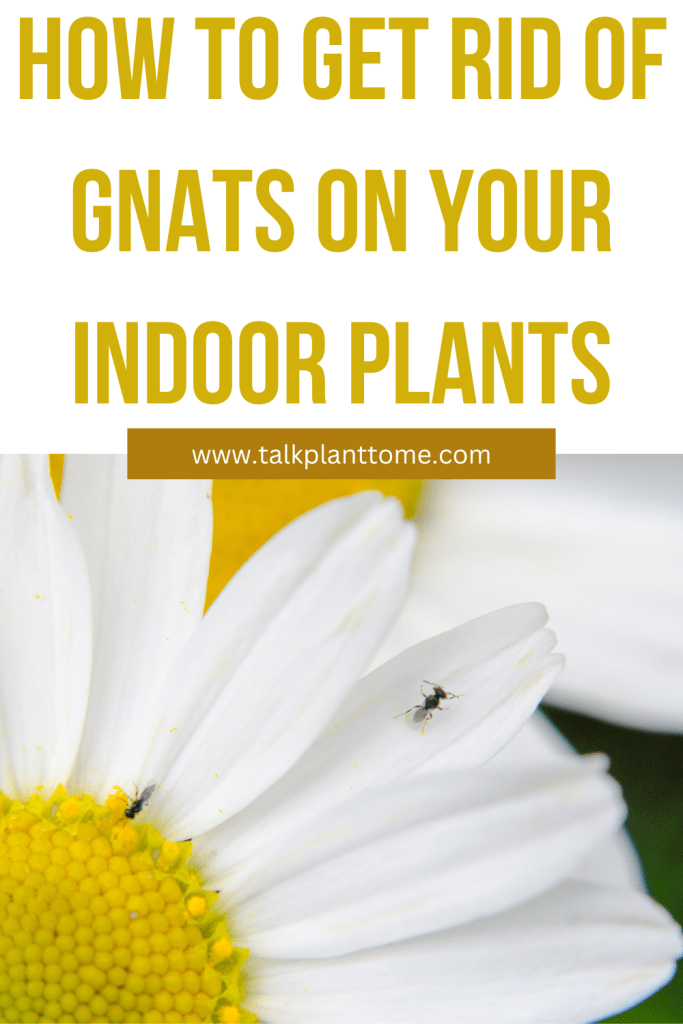
How To Get Rid Of Gnats On Your Indoor Plants
Steps for getting rid of gnats on houseplants:
Dealing with gnats on houseplants can be frustrating, but with a few simple steps, you can effectively get rid of them. Here’s a step-by-step guide to help you:
- Identify the gnats: Confirm that the small flying insects around your houseplants are indeed gnats. Fungus gnats are the most common type that infests indoor plants, and they are attracted to damp soil.
- Let the soil dry out: Gnats thrive in moist conditions, so allow the top inch of soil in your pots to dry out completely between waterings. This helps break the life cycle of the gnats by eliminating their preferred breeding environment.
- Adjust watering practices: When you do water your plants, make sure to water deeply, allowing excess water to drain away. Avoid overwatering, as this can create a favorable environment for the gnats to breed.
- Remove affected soil: If you notice heavy gnat infestation or suspect the larvae are present in the soil, consider replacing the top layer of soil in your pots with fresh, sterile potting mix. This helps eliminate any gnat eggs or larvae present.
- Sticky traps: Place yellow sticky traps near your plants to catch adult gnats in flight. These traps attract the gnats and prevent them from laying eggs in the soil. Make sure to position the traps close to the affected plants.
- Natural repellents: Some natural repellents can be effective in repelling gnats. Consider using a mixture of water, dish soap, and a few drops of neem oil. Spray this solution on the soil surface and around the plants to deter gnats.
- Increase air circulation: Gnats prefer still air, so improving air circulation around your plants can discourage them. Use a fan to create a gentle breeze or open windows to allow fresh air to circulate.
- Avoid organic matter buildup: Remove any fallen leaves, dead plant material, or organic debris from the soil surface. These materials can attract gnats and provide a breeding ground for them.
- Monitor and repeat: Keep a close eye on your plants and monitor for any signs of gnat activity. If necessary, repeat the steps mentioned above until the gnats are completely eradicated.
Remember, consistency is key when dealing with gnats. By following these steps and maintaining good plant hygiene, you should be able to eliminate the gnats and prevent future infestations.
Talk Plant To Me
If you enjoyed this article on How To Get Rid Of Gnats On Your Indoor Plants then you probably (hopefully!!) will enjoy these articles as well:

