Not all of us are lucky enough to have a sunny garden space, but that doesn’t mean you can’t grow delicious veggies in your shady spots! While most vegetables love basking in full sunlight, there are actually quite a few that can handle (and even thrive in) lower light conditions.
If you’ve got a garden corner, balcony, or yard that’s more on the shady side, you’re not out of options—there are plenty of shade-loving veggies that will happily call your garden home.
In this post, I’m sharing some of the best vegetables to grow in a lot of shade and tips on how to keep them healthy and productive. Whether you’re dealing with dappled sunlight, partial shade, or almost full shade, there’s something you can plant and enjoy. From leafy greens to root veggies, let’s dig into some shade-loving plants that will bring a fresh harvest to even the shadiest garden!
What Veggies Can I Grow In A Lot Of Shade?
High shade vegetables for your garden:
1. Spinach
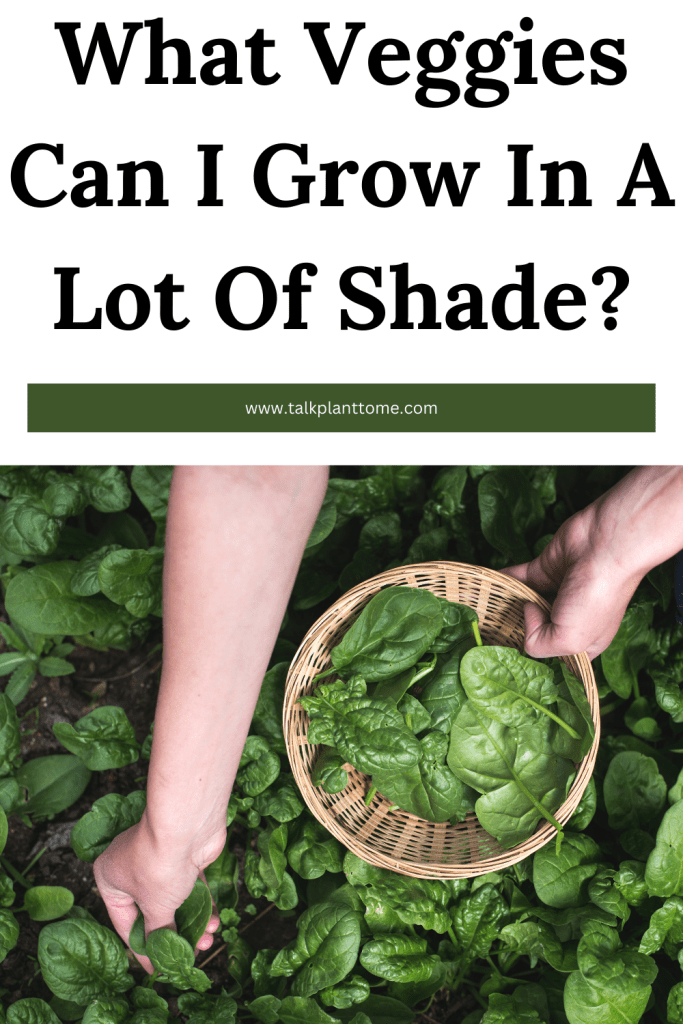
Spinach is one of the best leafy greens to grow in shady areas because it actually prefers cooler temperatures and can thrive with just a few hours of indirect sunlight. In fact, too much sun can cause spinach to bolt (go to seed), which leads to a bitter taste. Plant spinach in early spring or late summer for the best results, and keep the soil consistently moist. Spinach grows quickly, so you can harvest tender leaves in just a few weeks. It’s perfect for salads, smoothies, and cooking, making it a versatile addition to your shade garden.
2. Lettuce
Lettuce is another shade-loving superstar that does exceptionally well in lower light conditions. Like spinach, it prefers cooler temperatures and will bolt if exposed to too much heat and sun. Choose leaf lettuce varieties, such as butterhead or looseleaf, which tend to be more shade-tolerant than romaine or iceberg. Lettuce can be grown in pots, raised beds, or directly in the ground, making it easy to fit into small or shady spaces. Plant it in succession every couple of weeks for a continuous harvest of fresh, crisp leaves throughout the growing season.
3. Kale
Kale is one of the hardiest vegetables around and can grow in a wide range of conditions, including partial to full shade. In fact, kale’s flavor often improves with a bit of shade, as it prevents the leaves from becoming too tough and bitter. This superfood is also frost-resistant, making it ideal for extended growing into the cooler months. To encourage healthy growth, plant kale in well-drained, rich soil and water regularly to keep the soil consistently moist. Kale leaves can be harvested as baby greens for salads or allowed to mature for heartier dishes like soups and stews.
4. Swiss Chard
Swiss chard is a colorful, nutrient-packed vegetable that’s surprisingly shade-tolerant. With its vibrant stalks of red, yellow, and orange, it adds a splash of color to your garden while also being incredibly easy to grow. Chard can produce well in as little as 3-4 hours of sunlight, making it ideal for shaded garden beds or containers. It’s a versatile vegetable that can be used in place of spinach or kale in many recipes. Just keep the soil moist, and you’ll be able to harvest fresh leaves throughout the season.
5. Arugula
Arugula, also known as rocket, is a peppery green that thrives in cooler, shadier spots. It grows quickly and is ready to harvest in just a few weeks, making it a great choice for succession planting. Arugula’s flavor is milder when grown in the shade, which is perfect for those who prefer a less intense bite. It’s ideal for salads, sandwiches, and garnishes, and it pairs well with a variety of other greens. Plant it in early spring or fall, and enjoy the fresh, zesty taste of homegrown arugula.
6. Broccoli
Broccoli might seem like a sun-loving vegetable, but it can handle partial shade, especially during hot summers. With less sun exposure, broccoli heads might be a bit smaller, but the flavor will be sweeter and milder. It grows best in cool weather, so plant it in early spring or fall for a successful harvest. Make sure to keep the soil well-watered and provide a layer of mulch to retain moisture and keep the roots cool. Harvest when the heads are firm and tight, and don’t forget to eat the tender leaves and stalks too—they’re delicious!
7. Peas
Peas are a cool-weather crop that can tolerate partial shade, making them a great addition to a low-light garden. They grow well with just 4-5 hours of sunlight a day and don’t mind a bit of shade in the hottest part of the day. Peas are also low-maintenance, and they add nitrogen to the soil, which benefits other plants. Choose bush varieties for smaller spaces or trellis taller varieties to make the most of your garden area. Enjoy fresh, sweet peas straight from the pod, or let them mature for shelling.
8. Beets
Beets are root vegetables that do surprisingly well in shade, though they may take a bit longer to mature compared to beets grown in full sun. The shade slows down growth, resulting in tender, sweet roots that are perfect for roasting or salads. Beets also produce delicious, nutritious greens that can be used like spinach or Swiss chard. To encourage good root development, plant beets in loose, well-drained soil and keep them evenly watered. Thin the seedlings as they grow to allow enough space for the roots to develop fully.

9. Carrots
Carrots can grow in partial shade, though they prefer at least 4-6 hours of sun a day. In shady conditions, carrot tops will grow lush and green, while the roots may take a little longer to fill out. Choose shorter, rounder varieties like ‘Paris Market’ if you have very little sun, as they adapt better to low light. Keep the soil loose and free of rocks, and water consistently to encourage healthy root development. With a bit of patience, you’ll be rewarded with sweet, crunchy carrots perfect for snacking or cooking.
10. Radishes
Radishes are one of the fastest-growing vegetables and do quite well in partial shade. With less sun, radishes tend to be less spicy and more tender, making them perfect for fresh salads or garnishes. They’re an excellent choice for filling in gaps in your garden because they mature in just a few weeks. Plant radishes in loose, well-drained soil and keep them watered to prevent splitting. Their quick growth and adaptability make radishes a fantastic option for shady spots that might be too small for larger crops.
11. Green Onions (Scallions)
Green onions, or scallions, are perfect for shaded gardens because they grow well in partial shade and don’t require a lot of space. They can thrive with just 3-4 hours of sunlight, making them a great option for small, shaded areas or container gardens. Green onions are versatile and add a fresh, mild onion flavor to dishes. Simply plant the bulbs in loose soil, keep them watered, and harvest when the tops reach about 6-8 inches tall. You can even regrow them by cutting the tops and replanting the white bulbs for a continuous supply.
12. Cabbage
Cabbage is a cool-weather crop that can handle partial shade, making it a great choice for fall or spring planting. With 4-5 hours of sunlight a day, cabbage will form dense, firm heads, though it may take a bit longer to mature. The shade helps prevent the heads from splitting and keeps the leaves tender and crisp. Choose compact varieties like ‘Mini Savoy’ if you’re short on space, and plant in nutrient-rich soil. Keep cabbage well-watered, and you’ll have a bounty of crunchy, fresh leaves for slaws, salads, and stir-fries.
Talk Plant To Me
If you enjoyed this article on What Veggies Can I Grow In A Lot Of Shade? then you probably (hopefully!) will enjoy and find these articles helpful as well:
 | Talk Plant To Me |