Let me start by saying one important thing: growing jasmine indoors is like inviting a little slice of heaven into your home!! I swear that’s not even dramatic. They have seriously the most sweet fragrance, the most beautiful delicate flowers, and of course the stunning green leaves making it everything you could ever want in a houseplant!
But jasmine isn’t just about looks (or smells) guys- it’s a plant that teaches you patience, persistence and how to deal with a little bit of attitude. But don’t let the fear of the jasmine plants dramatics stop you from growing one. They are worth the drama and once you get into the flow it you’ll be amazed at how much easier it can get!
Anyways- If you’re ready to turn your living room into a fragrant oasis or just want a plant that’ll make your guests say, “What’s that amazing smell?” you’ve come to the right place. Let’s just get right into everything you need to know about growing jasmine indoors, from picking the right type to keeping it happy, healthy and (let’s be real the most important) blooming.
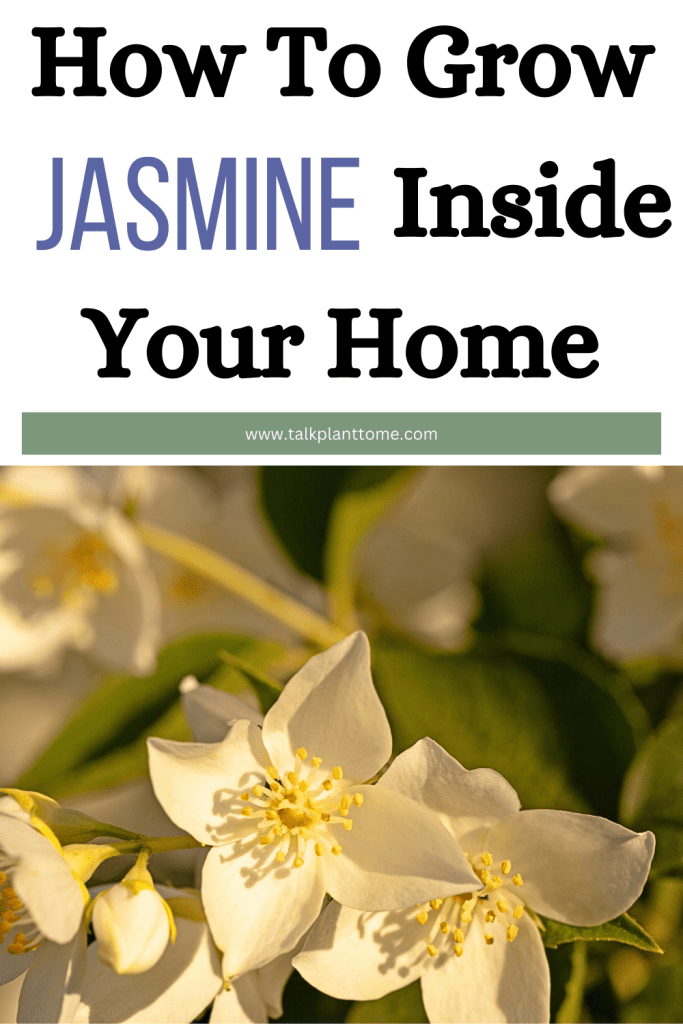
How To Grow Jasmine Inside Your Home
Tips for growing jasmine indoors:
1. Picking the Right Jasmine for Indoors
First things first- we gotta start with success right away by picking the PERFECT jasmine type for your home and lifestyle.
Not all jasmines are created equal, especially when it comes to indoor living. Some thrive in pots, while others would rather stretch their roots in the great outdoors. For indoor success, your best bets are:
- Jasminum polyanthum (Pink Jasmine): Known for its strong fragrance and pretty pink buds that open into white flowers, this one’s a classic for indoor growing.
- Jasminum sambac (Arabian Jasmine): If you’ve ever smelled jasmine tea, this is the star of the show. It’s also the national flower of the Philippines, so you know it’s got some prestige.
- Jasminum grandiflorum (Spanish Jasmine): This variety has larger flowers and a softer fragrance—perfect if you want something a bit more understated.
Pro tip: Pick a jasmine variety that matches your vibe. Want something dramatic and fragrant? Go for Pink Jasmine. Prefer a chill, tea-sipping mood? Arabian Jasmine is your girl.
2. Light: Let There Be (Lots of) Light
Jasmine is a light-loving plant, which makes sense because it’s basically the Beyoncé of houseplants. It wants to be in the spotlight at all times. Place it near a sunny south-facing window where it can soak up at least 4-6 hours of bright, indirect light daily.
If you don’t have a sunny spot (hey, not all of us are blessed with perfect lighting), consider investing in a grow light. Jasmine will appreciate the extra glow, and your other plants might thank you too. Just remember: too much direct sunlight can scorch its delicate leaves, so aim for bright but filtered light.
3. Temperature and Humidity: Keeping It Cozy
Jasmine likes it warm, but not too warm. It’s all about finding that dream “Goldilocks zone”. Keep the temperature between 60-75°F (15-24°C) for happy vibes. At night, a slight drop in temperature (50-55°F) can actually encourage blooming, so don’t be afraid to turn the thermostat down a notch.
Humidity is also a big deal for jasmine. Dry air is a no-go, especially in winter when indoor heating turns your home into a desert. To keep your jasmine thriving:
- Use a humidifier near your plant.
- Place it on a pebble tray with water (but don’t let the roots sit in water, jasmine does not appreciate some soggy roots or soil).
- Mist the leaves occasionally, but not when it’s blooming (flowers hate being misted—don’t ask me why, they’re just picky).
4. Potting and Soil: Setting the Stage 😉
Jasmine prefers a well-draining, slightly acidic soil. You can use a standard potting mix, but you can also step it up by adding some perlite or sand for better drainage. If you’re feeling extra fancy, mix in a bit of peat moss to lower the pH and make your jasmine feel like it’s back in its natural habitat.
Pick a pot with good drainage holes (non-negotiable!!!).
Jasmine is sensitive to overwatering, and sitting in soggy soil is the fastest way to kill its vibe and sadly its roots. Also, don’t be afraid to start with a smaller pot; jasmine likes to be a little snug around the roots. Repot only when it’s absolutely necessary (every 2-3 years or when roots are busting out of the pot).
5. Watering: The Art of Not Overdoing It
If I had a dollar for every plant I killed by overwatering, I’d be writing this from a penthouse with its own indoor garden. Jasmine likes consistent moisture, but there’s a fine line between “moist” and “drowning.”
Here’s the trick:
- Water when the top inch of soil feels dry to the touch.
- In warmer months, you might need to water more frequently. In winter, dial it back because jasmine doesn’t like wet feet when it’s cold. And they can shrivel up as a result

Pro tip: Use room-temperature water. Cold water can shock the roots, and hot water… well, let’s just not go there.
6. Feeding: Give It Some Plant Food Love
Jasmine is a hungry plant, especially when it’s growing and blooming. During the spring and summer, feed it with a balanced, water-soluble fertilizer every two weeks. Look for something with equal parts nitrogen, phosphorus, and potassium (like a 10-10-10 blend).
When fall rolls around, jasmine takes a little break from growing, so you can cut back on the feeding to once a month or stop altogether in winter. Just don’t overfeed—too much fertilizer can cause more leaves than flowers, and we’re here for the blooms.
7. Pruning: Keep It Tidy and Blooming
Jasmine grows fast, and if you’re not careful, it’ll take over your space like an uninvited roommate. Regular pruning keeps it manageable and encourages more flowers.
Here’s how to prune like a pro:
- After blooming, trim back the stems to shape the plant and remove any dead or weak branches.
- Don’t go too crazy—leave some healthy growth for the next round of blooms.
- Use clean, sharp scissors or pruning shears to avoid damaging the plant.
8. Training Your Jasmine: Let It Climb
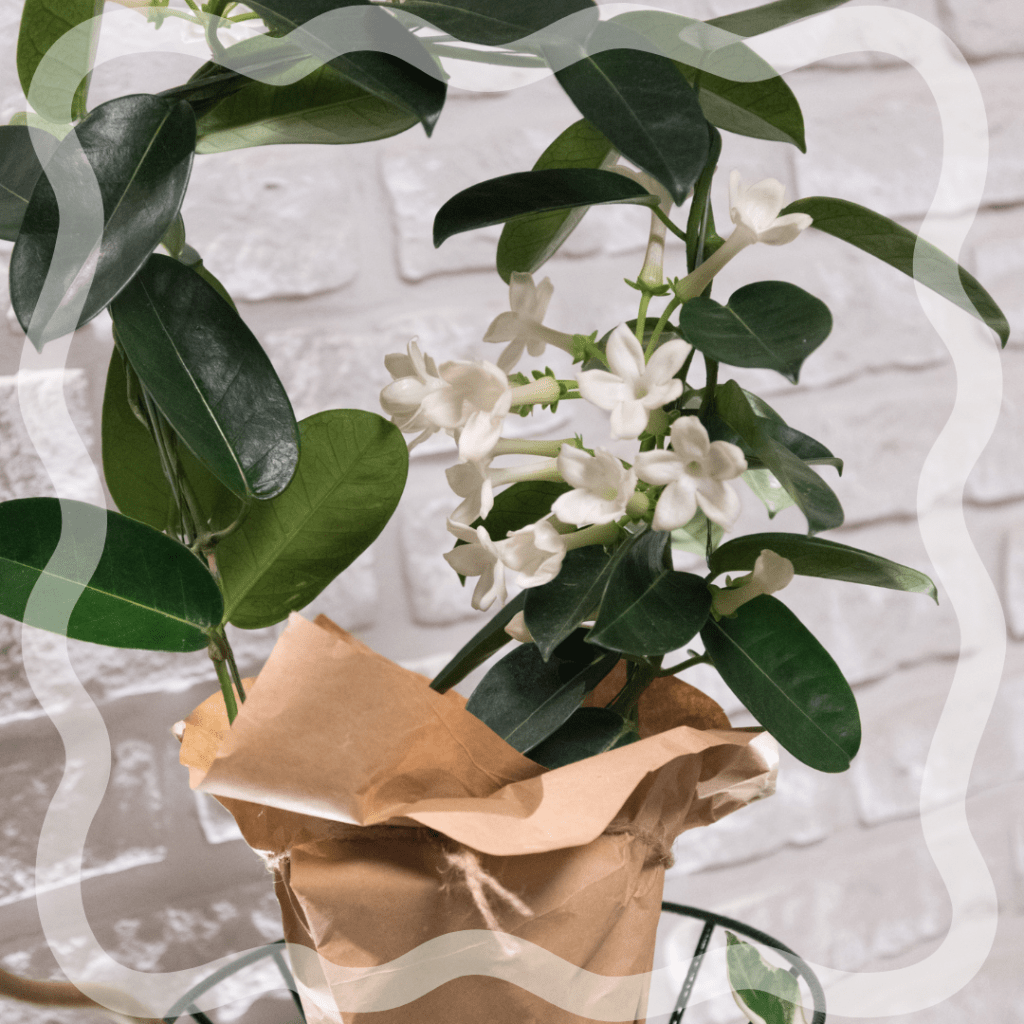
Jasmine is a natural climber, and it loves to sprawl out like it owns the place. Use a trellis, hoop, or even a DIY support made from bamboo stakes to train its vines. Gently tie the stems to the support with plant ties or soft string, and it’ll reward you with a beautifully cascading display.
9. Common Challenges and How to Fix Them
- No Blooms?
If your jasmine is giving you the silent treatment, it might not be getting enough light, or the temperature might be too high at night. Adjust its environment, and give it time—patience is key. - Yellow Leaves?
This could be a sign of overwatering or poor drainage. Check the soil and cut back on watering if it’s too wet. - Pests (Ugh)?
Aphids, spider mites, and whiteflies love jasmine as much as you do. Combat them with insecticidal soap or neem oil, and wipe the leaves regularly to keep things under control.
Growing jasmine indoors takes a little effort, but once it starts blooming and filling your home with its heavenly fragrance, you’ll realize it was all worth it. Plus, there’s something incredibly satisfying about nurturing a plant that gives back so much beauty and joy.
So, go ahead and give it a try! Your home (and your nose) will thank you. And when your friends ask how you managed to grow such a stunning plant, just smile and say, “Oh, you know, it’s just a little something I learned from my favorite plant-obsessed friend.”
Happy growing, and may your jasmine thrive like the queen it is!
Talk Plant To Me
If you enjoyed this article on How To Grow Jasmine Inside Your Home then you probably (hopefully!) will enjoy and find these articles helpful as well:

